
Introduction
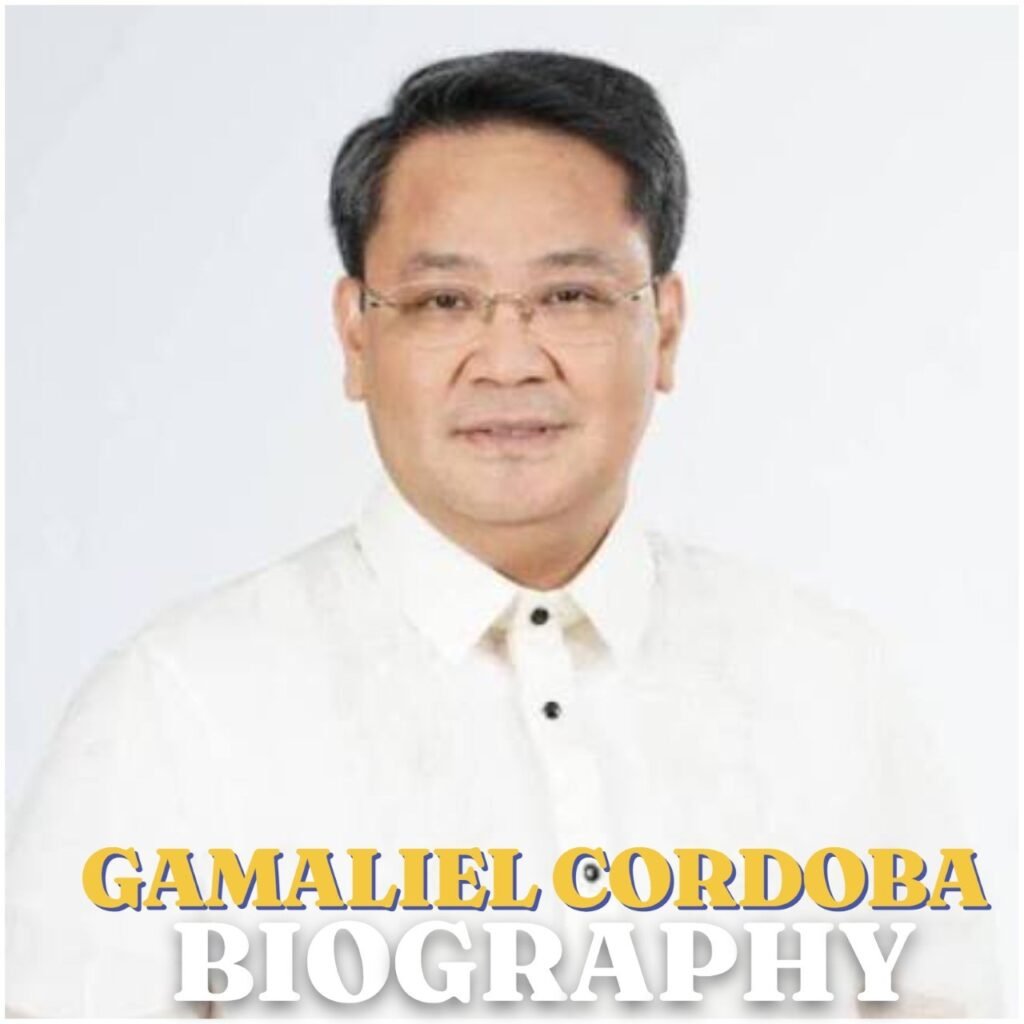
Gamaliel Cordoba is a Filipino lawyer, economist and public servant. He has built a career in some of the Philippines’ most important government institutions. He is best known for his long service as Commissioner of the National Telecommunications Commission (NTC) and his leadership of the Commission on Audit (COA).
Cordoba has worked in several areas of government, including telecommunications, public administration and financial accountability. During his time at the NTC, he helped oversee major changes in the country’s communications industry. He later led the COA, where he focused on improving government auditing and monitoring public projects.
On November 13, 2026, Cordoba reached another major milestone when President Ferdinand Marcos Jr. appointed him as an Associate Justice of the Supreme Court of the Philippines. The appointment marked a new chapter in his public service career and brought fresh attention to his professional achievements.
Who Is Gamaliel Cordoba?
Gamaliel Asis Cordoba is a Filipino lawyer and government official. Before joining the Supreme Court, he served as chairperson of the Commission on Audit. The COA is responsible for checking how government agencies collect, manage and spend public funds.
He also served as Commissioner of the National Telecommunications Commission from 2009 to 2022. His 13-year tenure made him the longest-serving commissioner in the agency’s history. He held the position under four presidents: Gloria Macapagal Arroyo, Benigno Aquino III, Rodrigo Duterte and Ferdinand Marcos Jr.
His background in economics and law has shaped his work in government. These fields gave him the knowledge and experience needed to handle complex issues involving public policy, regulation and financial management.
Early Life and Background
Details about Cordoba’s childhood and family background are limited in public records. Most available biographies focus on his education, legal experience and years in government.
His academic interests led him to study economics and law. These subjects later became important to his work in public administration, telecommunications regulation and government auditing.
Although Cordoba has held several high-profile positions, he has kept much of his private life away from public attention. Information about his parents, siblings and early family experiences is not widely documented. It is therefore important to avoid treating unverified online claims as established facts.
Education
Cordoba attended Ateneo de Manila University, where he earned a Bachelor of Arts degree in Economics in 1992. His studies introduced him to economic policy, financial systems and the management of resources.
He continued at the Ateneo School of Law and earned his Juris Doctor degree in 1996. His legal education prepared him for work involving government regulations, public policy and institutional responsibilities.
In 1997, he passed the Philippine Bar Examination. This achievement qualified him to practise law and opened the door to a career that would later combine legal work with public service.
Professional Career
Early Career in Private Legal Practice
Cordoba began his professional journey in private legal practice. He worked as an associate at Siguion Reyna, Montecillo and Ongsiako, an established law firm in the Philippines.
He later worked as a tax lawyer at SyCip Gorres Velayo & Co. This experience exposed him to legal and financial matters involving businesses and taxation.
His work in the private sector gave him a strong foundation before he moved into government. It also helped him develop an understanding of the legal and financial issues that affect both businesses and public institutions.
Service at the Office of the President
Cordoba entered government service in 2001 when he joined the Office of the President. He first worked as a director in the Office of the Presidential Chief of Staff.
He later became Assistant Executive Secretary, serving from 2002 to 2003. From 2003 to 2006, he worked as an Undersecretary at the Office of the President.
Between 2006 and 2007, he served as Appointments Secretary under President Gloria Macapagal Arroyo. His responsibilities involved matters relating to presidential appointments and government administration.
He also served on the boards of government-related institutions, including the Philippine Amusement and Gaming Corporation. These assignments gave him wider experience in public-sector management.
National Telecommunications Commission
A major turning point came in 2009, when President Gloria Macapagal Arroyo appointed Cordoba as Commissioner of the National Telecommunications Commission.
The NTC regulates telecommunications and broadcasting services in the Philippines. Its responsibilities cover mobile networks, internet providers, radio and television services, and other communication systems.
Cordoba remained in the role until 2022. During those 13 years, he served under four presidents and oversaw important developments in the country’s communications industry.
Encouraging Competition in Telecommunications
One of the major developments during Cordoba’s time at the NTC was the selection of a third major telecommunications player.
For many years, two large companies had dominated the Philippine telecommunications market. The entry of another competitor was intended to increase competition and encourage better services.
The NTC oversaw the selection process for the new player. The move was expected to put pressure on existing providers to improve network quality, expand coverage and offer better options to consumers.
This development became one of the defining events of Cordoba’s time at the commission.
Digital Television and Internet Development
Cordoba’s tenure also included important work on the country’s transition to digital television. The Philippines adopted Japan’s Integrated Services Digital Broadcasting-Terrestrial system as its digital television standard.
The move was part of a wider effort to modernise broadcasting. Digital technology can make better use of broadcast frequencies and improve the quality of television transmission.
Internet development was another important area. The NTC worked to streamline permits for telecommunications towers and fibre-optic installations. These measures were intended to help service providers expand their networks and improve connectivity.
Emergency Communication and Public Safety
Cordoba’s work at the NTC also covered communication services during emergencies. The commission supported programmes such as Libreng Tawag, which provided free calls and charging facilities in disaster-hit communities.
These services helped affected residents contact family members and obtain important information. The NTC also worked with radio groups to support communication during typhoons and other emergencies.
The commission addressed online child sexual abuse material as well. It worked with internet service providers on measures to restrict access to illegal content.
The ABS-CBN Franchise Controversy
Cordoba’s tenure at the NTC was not without controversy. One of the most widely discussed events was the commission’s 2020 order against ABS-CBN.
On May 5, 2020, the NTC issued a cease-and-desist order requiring the network to stop its television and radio broadcasts after its legislative franchise expired.
The decision attracted strong reactions across the Philippines. Media organisations, journalists and members of the public raised concerns about press freedom and the effect of the order on broadcasting.
Supporters of the decision argued that the commission had acted within its authority because the network’s franchise had expired. The controversy became part of a wider national debate about media regulation and the renewal of broadcast licences.
It remains one of the most discussed decisions from Cordoba’s years as NTC commissioner.
Chairperson of the Commission on Audit
In October 2022, President Ferdinand Marcos Jr. appointed Cordoba as chairperson of the Commission on Audit. The appointment placed him in charge of an independent constitutional body responsible for examining government revenue, spending and public assets.
His new role was different from his previous work in telecommunications. Instead of regulating communication services, he now led an institution responsible for checking whether public funds were used properly and according to the law.
Cordoba made modernising government audits a major priority. He supported the use of digital systems, improved audit procedures and technology that could help identify possible irregularities in public spending.
Modernising Government Auditing
Under Cordoba’s leadership, the COA pursued plans to improve its auditing processes through technology.
Digital tools can help auditors review large amounts of financial information, identify unusual transactions and track government spending. They can also make audit work faster and help officials detect possible misuse of public funds.
Cordoba’s approach placed greater emphasis on using technology to support transparency. The wider goal was to make government oversight more effective and strengthen public confidence in the use of state resources.
Audits of Flood Control Projects
Concerns about irregularities in government flood control projects brought renewed attention to the COA in 2025 and 2026.
Under Cordoba’s leadership, the commission conducted fraud audits of selected projects. The reviews examined project implementation, government spending and whether reported construction work had actually been completed.
By November 2026, the government had reported that the COA had submitted at least 50 fraud audit reports to the Office of the Ombudsman and the Independent Commission for Infrastructure.
Cordoba also promoted GPS-based geotagging for infrastructure projects. This technology can help auditors confirm where a project is located and check its physical progress.
The aim is to make it easier to identify incomplete, questionable or nonexistent projects. These efforts placed public infrastructure spending and government accountability at the centre of his work at the COA.
Appointment to the Philippine Supreme Court
On November 13, 2026, President Ferdinand Marcos Jr. appointed Cordoba as an Associate Justice of the Supreme Court of the Philippines.
His name had appeared on the Judicial and Bar Council’s shortlist of candidates for the position. He was selected to succeed Associate Justice Amy Lazaro-Javier, who was scheduled to retire on November 16, 2026.
The Supreme Court is the highest judicial authority in the Philippines. It interprets the Constitution, resolves major legal disputes and reviews decisions made by lower courts.
The appointment marks a significant change in Cordoba’s career. After years of working in government administration and financial oversight, he is moving into the country’s highest court.
His experience in law, regulation and public institutions will form part of his professional background as an Associate Justice. His new responsibilities will require him to take part in deciding important legal questions affecting the country.
International Roles and Contributions
Cordoba’s work has also reached beyond the Philippines. He has represented the country’s audit institution in international organisations and taken part in discussions about public financial management.
He served as an external auditor of the International Labour Organization. This role involved examining and presenting financial reports for the organisation.
He also chaired the Association of Southeast Asian Nations Supreme Audit Institutions for 2024 and 2025. The organisation promotes cooperation among national audit institutions across Southeast Asia.
His international responsibilities have given him opportunities to exchange ideas with other public officials and contribute to discussions about transparency, financial oversight and institutional accountability.
Awards and Recognition
Cordoba has received several honours for his work in public service and international cooperation.
In 2010, President Gloria Macapagal Arroyo awarded him the Presidential Medal of Merit. The honour recognised his service and contribution to the Filipino people.
Japan also recognised his work in strengthening cooperation between the two countries in information and communications technology. In July 2023, the Japanese government awarded him the Order of the Rising Sun, Gold Rays with Neck Ribbon.
In June 2026, he received the Gawad Gat Andres Bonifacio Award, described as the City of Manila’s highest distinction. The award added to the recognition he had received throughout his years in government.
Personal Life and Family
Cordoba keeps his personal life largely private. While his professional background is well documented, reliable information about his family is limited.
Details about his wife, children, parents and siblings have not been consistently confirmed by dependable public sources. It would therefore be misleading to make definite claims about his marital status or family background.
He is best known publicly for his work in law and government. Unlike some public figures, he has not made his private life a major part of his public profile.
How Old Is Gamaliel Cordoba?
Cordoba’s exact date of birth has not been clearly established in reliable public records. His official professional profile focuses on his education and career rather than his birth details.
For this reason, his age cannot be stated accurately without a confirmed date of birth.
What Is Gamaliel Cordoba’s Religion?
Cordoba’s religious affiliation has not been reliably confirmed in public sources. It is best not to assign him a religion based on assumptions or information from unverified profiles.
What Is Gamaliel Cordoba’s Nationality?
Gamaliel Cordoba is Filipino. He has spent much of his professional life serving the Philippine government and has represented the country in international audit organisations.
What Is Gamaliel Cordoba’s Net Worth?
Cordoba’s exact net worth is not publicly known. Although he has worked in private legal practice and held senior government positions, there is no verified public figure that establishes his personal wealth.
His career has included legal practice, government administration, telecommunications regulation and financial oversight. However, these roles alone do not reveal his total assets, savings or investments.
Any specific net worth figure published online should therefore be treated as an estimate rather than a confirmed amount.
Legacy and Public Image
Gamaliel Cordoba’s career has been shaped by his work in two important areas of Philippine governance: telecommunications regulation and government auditing.
At the NTC, he served for 13 years and oversaw developments in digital broadcasting, telecommunications competition and internet connectivity. His tenure also included difficult public debates, especially the 2020 cease-and-desist order against ABS-CBN.
At the COA, he focused on improving government audits and strengthening the monitoring of public spending. His support for digital auditing and infrastructure project verification reflected an effort to make public oversight more effective.
His appointment to the Supreme Court in November 2026 added another major responsibility to his career. It placed him in a position where his legal knowledge and experience in public administration will contribute to the work of the country’s highest court.
Cordoba’s professional journey shows how a background in law and economics can lead to different forms of public service. His legacy will continue to be shaped by the decisions he made, the institutions he led and the responsibilities he carries in the judiciary.
Conclusion
Gamaliel Cordoba has built a career that spans private legal practice, presidential administration, telecommunications regulation and government auditing. His 13 years at the National Telecommunications Commission and his leadership of the Commission on Audit made him an important figure in Philippine public service. His appointment as an Associate Justice of the Supreme Court on November 13, 2026, marks a new stage in his professional journey. His career includes major developments as well as public controversies, but his next chapter will be defined by the responsibilities and decisions that come with serving on the country’s highest court.
Frequently Asked Questions About Gamaliel Cordoba
Who is Gamaliel Cordoba?
Gamaliel Asis Cordoba is a Filipino lawyer, economist and public servant. He previously served as Commissioner of the National Telecommunications Commission and Chairperson of the Commission on Audit.
What is Gamaliel Cordoba known for?
He is known for his 13-year tenure as NTC commissioner, his leadership of the Commission on Audit and his appointment as an Associate Justice of the Philippine Supreme Court in November 2026.
What did Gamaliel Cordoba study?
He earned a Bachelor of Arts degree in Economics in 1992 and a Juris Doctor degree in 1996 from Ateneo de Manila University.
When did Gamaliel Cordoba pass the Philippine Bar Examination?
He passed the Philippine Bar Examination in 1997.
When was Gamaliel Cordoba appointed NTC commissioner?
He was appointed Commissioner of the National Telecommunications Commission in 2009 and served until 2022.
When did Gamaliel Cordoba become Chairperson of the Commission on Audit?
President Ferdinand Marcos Jr. appointed him chairperson of the Commission on Audit in October 2022.
When was Gamaliel Cordoba appointed to the Supreme Court?
President Ferdinand Marcos Jr. appointed him as an Associate Justice of the Philippine Supreme Court on November 13, 2026.
What awards has Gamaliel Cordoba received?
His honours include the Presidential Medal of Merit in 2010, Japan’s Order of the Rising Sun in 2023 and the Gawad Gat Andres Bonifacio Award in 2026.
Is Gamaliel Cordoba married?
Reliable public information about his marital status and immediate family is limited. His private life has not been widely documented.
What is Gamaliel Cordoba’s net worth?
His exact net worth has not been publicly confirmed. Online estimates should be treated with caution.