
Introduction
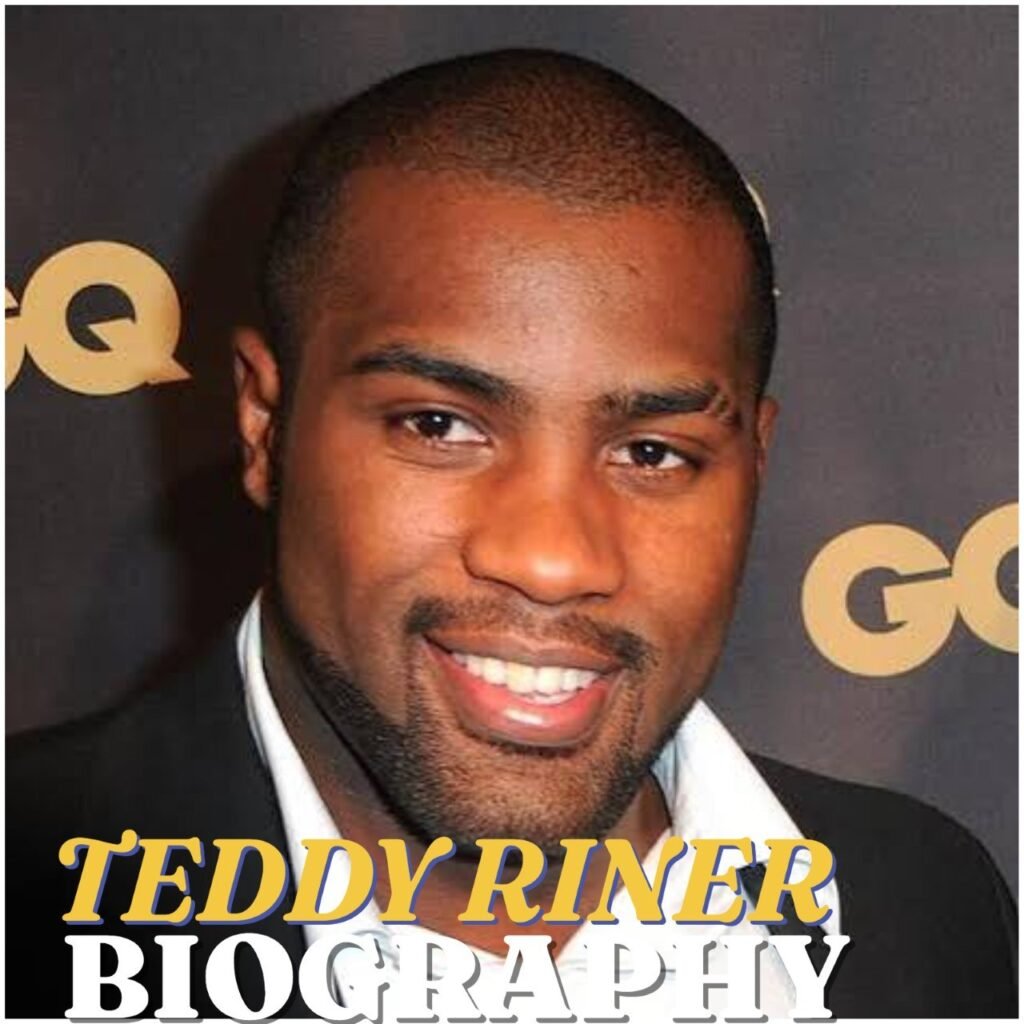
Teddy Riner is a French judoka widely regarded as one of the greatest heavyweight competitors in the history of the sport. Famous for his remarkable strength, technical ability and long winning streak, he has won multiple Olympic gold medals and 11 world championship titles. His achievements have made him a sporting icon in France and an influential figure in international judo.
Born in Guadeloupe and raised in Paris, Riner discovered judo as a young child. What began as an activity to channel his energy soon became a lifelong ambition. He rose through the ranks with extraordinary speed, winning major international competitions while still a teenager. Over the years, he developed a reputation for dominating opponents and performing under intense pressure.
In November 2026, Riner made headlines for a surprising reason beyond sport: he announced his intention to run in France’s 2027 presidential election. The announcement added a new dimension to his public life, although he has also said he hopes to continue competing and pursue another Olympic appearance in 2028. His story now brings together sporting excellence, personal ambition and an unexpected move into politics.
Early Life and Family Background
Teddy Pierre-Marie Riner was born on April 7, 1989, in Pointe-à-Pitre, Guadeloupe, a French overseas territory in the Caribbean. He spent only part of his early childhood on the island before his family moved to mainland France. He grew up in Paris, where he was introduced to different sports and gradually discovered the discipline that would change his life.
Riner was raised in a supportive family. His parents, Moïse and Marie-Pierre Riner, encouraged him to explore sports and develop his interests. He grew up alongside his siblings and was particularly energetic as a child. His parents enrolled him in a multisport programme when he was about five years old, hoping that organised activities would help him channel that energy.
At first, Riner tried several sports, including football, swimming, tennis, golf and climbing. He enjoyed being active, but judo gradually became his favourite. He showed unusual physical ability from a young age, and his height and strength helped him stand out among other children. However, physical advantages alone did not explain his success. His determination, discipline and willingness to train consistently helped him turn early promise into an exceptional sporting career.
Education and Early Interest in Judo
Riner’s education took place in France, where he combined his studies with an increasingly demanding sporting schedule. As his talent became clear, he received opportunities to train in specialised sporting environments. This allowed him to develop his judo skills while continuing his education.
He attended schools in France, including institutions that supported young athletes. His academic journey eventually included a professional qualification in microcomputing. Balancing schoolwork with intensive training was not always easy, but he understood that education remained important even as his sporting career began to take off.
Riner later pursued further studies at Sciences Po through a programme designed for high-level athletes. This experience helped him develop interests beyond competition and understand the wider responsibilities that come with public recognition. His education also gave him a foundation for exploring business, leadership and other opportunities outside judo.
Teddy Riner’s Judo Career and Rise to Fame
Discovering Judo and Developing His Talent
Riner began practising judo at a young age after his parents enrolled him in a multisport club in Paris. He initially explored several activities, but judo quickly captured his attention. He enjoyed the combination of physical strength, balance, technique and strategy. Unlike sports that rely mainly on speed or endurance, judo challenged him to understand his opponent and use movement intelligently.
His natural abilities became apparent early. He was taller and stronger than many children his age, but his coaches also recognised his potential to learn complex techniques. They helped him develop his balance, timing and control, ensuring that his physical size did not become his only advantage.
As he progressed, Riner became increasingly serious about the sport. He joined competitive training programmes and began facing more experienced opponents. His development was rapid, and he soon attracted attention within French judo. By his teenage years, he was already competing at a level that placed him among the country’s most promising young athletes.
Becoming a World Champion as a Teenager
Riner’s rise to international prominence began when he won the heavyweight title at the 2007 World Judo Championships in Rio de Janeiro. He was only 18 years old, making the achievement a remarkable breakthrough. His victory showed that he could compete with and defeat established senior athletes despite his young age.
The following year, he continued to make history. At the 2008 World Championships in the open-weight category, he secured another major title. He also represented France at the Beijing Olympic Games, where he won a bronze medal in the men’s heavyweight division. Although he did not take the gold, the result confirmed that he belonged among the world’s leading judokas.
His early success brought greater expectations. Riner was no longer simply a promising young athlete; he had become one of the central figures in French judo. He responded by maintaining a demanding training routine and continuing to improve his technique. His ability to combine physical power with tactical patience made him increasingly difficult to defeat.
Dominating International Judo
After his Olympic debut, Riner continued to dominate major competitions. He won world championship titles in 2009 and 2010, establishing himself as the leading heavyweight judoka of his generation. His performances were built on a mixture of strength, timing and technical precision. He could control an opponent’s movement, wait for an opening and then use a powerful throw to secure victory.
At the 2011 World Championships in Paris, he won another heavyweight title in front of a home crowd. The victory strengthened his status as a national sporting hero. He also became known for his composure, rarely allowing the pressure of major events to disrupt his performance.
Riner’s success continued through the following years. He won additional world titles in 2013, 2014 and 2015, extending his remarkable record. His ability to remain at the top of the sport for so long was particularly impressive because heavyweight judo demands considerable physical strength, conditioning and tactical awareness.
In 2017, he added another world championship title in Budapest. He later won his 11th world championship title in 2023 in Doha, returning to the top after a period in which he had competed less frequently. His record of 11 world titles remains one of the most extraordinary achievements in the history of judo.
Olympic Glory in London and Rio
The London 2012 Olympic Games marked a major turning point in Riner’s career. After winning bronze in Beijing, he arrived in London determined to claim the gold medal. Competing in the men’s over-100-kilogram category, he defeated his opponents and reached the final, where he secured the Olympic title.
The victory made him an Olympic champion and confirmed his position as the leading heavyweight judoka in the world. It also brought him enormous recognition in France, where his achievement was celebrated as a major sporting success.
Four years later, he returned to the Olympic stage at the Rio 2016 Games. Riner successfully defended his heavyweight title, becoming one of the few judokas to win consecutive Olympic gold medals in the division. His victory demonstrated that he could maintain his dominance across different generations of competitors.
By this stage, Riner had become much more than a successful athlete. He was a symbol of consistency and excellence in French sport. His performances inspired younger judokas and helped raise the international profile of the sport.
The Historic Winning Streak and Tokyo Olympics
One of the most remarkable parts of Riner’s career was his extraordinary unbeaten run. Between September 2010 and February 2020, he won 154 consecutive fights. The streak lasted nearly a decade and made him one of the most difficult athletes to beat in any combat sport.
His run eventually ended at the Paris Grand Slam in February 2020, when Japan’s Kokoro Kageura defeated him. The loss attracted attention because Riner had remained unbeaten for so long. However, it did not erase his achievements. Instead, it demonstrated how rare and difficult his winning streak had been.
At the delayed Tokyo 2020 Olympic Games, held in 2021, Riner won bronze in the individual heavyweight event. He then helped France win gold in the mixed team competition. The team victory was particularly important because it showed his ability to contribute to a collective effort, not just individual success.
The Tokyo Games also reinforced his determination to continue competing. Rather than allowing setbacks to end his career, he returned to training and focused on preparing for another Olympic challenge.
Paris 2024 and a Record-Breaking Achievement
The Paris 2024 Olympic Games became one of the defining moments of Riner’s career. Competing in front of a home crowd, he entered the men’s over-100-kilogram event with the pressure of representing France at an Olympics held in his own country.
He delivered a remarkable performance, winning the individual heavyweight gold medal after defeating South Korea’s Kim Min-jong in the final. The victory gave him his third individual Olympic gold medal, following his successes in London and Rio. It also made him the first judoka to win three individual Olympic gold medals in the heavyweight category.
Riner then helped France secure another gold medal in the mixed team event. His contribution was crucial to the team’s success, and the victory added to his already extraordinary Olympic record. He had now won five Olympic gold medals in total, alongside two bronze medals.
His achievements in Paris made him one of the most decorated judokas in Olympic history. He also shared the honour of lighting the Olympic cauldron during the opening ceremony with French athletics legend Marie-José Pérec. The moment was especially memorable because it placed him at the centre of a celebration watched by audiences around the world.
Returning to Competition and Paris Saint-Germain
After the Paris Olympics, Riner continued to consider his future in elite judo. Although he had achieved almost everything possible in the sport, he remained interested in competing and testing himself against younger opponents. He has spoken about the importance of enjoying the sport and continuing to pursue new goals.
In 2026, Paris Saint-Germain announced his return to its judo section. The move brought him back to a club with which he had an established connection and offered a new chapter in his sporting career. His return also strengthened the club’s profile in judo, where he remains one of the most recognisable athletes in the world.
Riner has not ruled out competing at the Los Angeles 2028 Olympic Games. However, his plans will depend on his physical condition, sporting commitments and the demands of his newly announced political ambitions. He has indicated that he would like to continue his sporting journey if circumstances allow.
Trending: Teddy Riner Announces His Bid for the 2027 French Presidential Election
On November 9, 2026, Teddy Riner made an announcement that surprised both sports fans and political observers. He declared his intention to run in France’s 2027 presidential election. The announcement marked a major shift in his public life, moving him from the world of international sport into the highly competitive arena of national politics.
Riner explained that he was concerned about the divisions affecting French society. He described himself as neither left-wing nor right-wing and said he wanted to become a candidate who could bring people together. His campaign slogan is “La France qu’on veut”, which translates as “The France We Want”. He has presented his decision as an effort to offer hope and encourage national unity.
His announcement attracted immediate attention because he has no established record as an elected politician. Riner has acknowledged that he is entering an unfamiliar environment, but he argues that remaining silent about the country’s problems would be irresponsible. He has discussed issues such as social division, the cost of living, public debt, racism and the need to create better opportunities for younger generations.
However, announcing a candidacy does not automatically secure a place on the presidential ballot. Under French electoral rules, he must obtain 500 endorsements from elected officials to qualify. He also needs to develop a detailed programme and organise a campaign capable of competing with experienced political figures. His announcement has therefore opened a new chapter, but the practical challenges ahead remain substantial.
Riner has also said that he does not intend to abandon judo immediately. He hopes to remain involved in the sport and has not ruled out competing at the Los Angeles 2028 Olympics if his responsibilities and circumstances allow. Whether he can successfully balance a presidential campaign with elite sport remains to be seen. For now, his political ambition has become one of the most talked-about developments in his career.
Personal Life and Family
Despite his public profile, Teddy Riner has generally kept his family life away from excessive media attention. He has been in a long-term relationship with Luthna Plocus, who has supported him throughout different stages of his sporting career. The couple have built a family while managing the demands that come with his international competitions and public responsibilities.
Riner and Plocus have two children. Their son, Eden, was born in April 2014, while their daughter, Ysis, was born in September 2018. Riner has occasionally spoken about the importance of being present for his children, especially when his training and competition schedule requires him to spend time away from home.
Fatherhood has added another dimension to his life. He has spoken about wanting his children to grow up with strong values, including respect, discipline and determination. These are qualities that have also shaped his sporting career. Although he is admired for his achievements, he has made it clear that his family remains an important source of motivation and support.
Teddy Riner’s Age, Religion, Ethnicity, Nationality and Height
Teddy Riner was born on April 7, 1989. As of November 2026, he is 37 years old. His zodiac sign is Aries. He was born in Pointe-à-Pitre, Guadeloupe, and later grew up in Paris, France.
Riner is French by nationality and has Guadeloupean roots. Guadeloupe is a French overseas territory in the Caribbean, and his background is an important part of his personal identity. He has spoken about his connection to the island and the pride he feels in representing France internationally. His religious beliefs have not been clearly established through reliable public statements, so it would be inaccurate to assign him a specific religion.
Riner is approximately 2.04 metres tall, or 6 feet 8 inches, and competes in the heavyweight division. His powerful build has made him physically imposing on the judo mat. However, his success cannot be explained by size alone. His balance, timing, grip strength and technical skill have been just as important in helping him defeat opponents.
Teddy Riner’s Social Media Presence
Teddy Riner has a strong presence on social media, where he shares updates about his sporting career, training, family moments and public activities. His accounts allow fans to follow his preparations for major competitions and celebrate his achievements. They also give him a platform to communicate directly with supporters.
His online presence became even more significant following his announcement of a presidential bid in November 2026. He used social media to communicate his decision and introduce his campaign message. This has expanded the range of subjects covered by his public accounts, bringing together sport, social issues and politics.
Riner also uses his public profile to support causes beyond competition. He has worked with UNICEF France and has been associated with the Imagine Institute for genetic diseases. His involvement in these initiatives reflects an interest in children’s welfare, health research and social responsibility.
Teddy Riner’s Net Worth
Teddy Riner has earned considerable income through his successful sporting career, commercial partnerships and public appearances. However, his exact net worth has not been confirmed through publicly available financial records. Online estimates vary, so any specific figure should be treated as an approximation rather than an established fact.
His sources of income include competition-related earnings, sponsorship agreements, brand partnerships and other professional activities. As one of France’s most recognisable athletes, he has worked with major brands and benefited from opportunities connected to his international reputation. His Olympic and world championship achievements have also increased his commercial value.
Riner has developed interests beyond competing. His involvement in the Teddy Riner Academy, public engagements and other projects has expanded his professional activities. His return to Paris Saint-Germain also reflects his continued connection to elite sport. With his growing public responsibilities and possible political campaign, his professional life may continue to develop in new directions. Nevertheless, without verified financial disclosures, it would be misleading to state a precise net worth.
Legacy and Achievements
Teddy Riner has already secured a place among the greatest judokas in history. His 11 world championship titles and five Olympic gold medals are extraordinary achievements, especially in a sport where physical demands and competition levels make long-term dominance difficult. His three individual Olympic gold medals in the heavyweight category have set a remarkable standard for future generations.
His unbeaten streak of 154 consecutive victories between 2010 and 2020 is another defining part of his legacy. It demonstrated not only his physical ability but also his consistency, discipline and capacity to perform under pressure. Even after his winning run ended, he continued competing and returned to the top level, showing that setbacks did not have to end his ambitions.
Beyond medals and records, Riner has become an influential figure in French sport. He has inspired young athletes, supported charitable causes and helped bring international attention to judo. His decision to enter the 2027 presidential race may eventually add a new dimension to his public legacy. Whatever happens politically, his achievements on the mat have already made him one of the most important sporting figures of his generation.
Conclusion
Teddy Riner’s journey from a young boy discovering judo in Paris to a five-time Olympic gold medallist is a remarkable story of talent, discipline and determination. His 11 world titles, seven Olympic medals and extraordinary winning streak have established him as one of the greatest judokas of all time. His decision to announce a bid for the 2027 French presidency has introduced an unexpected new chapter, while his ambition to continue competing shows that he is not ready to leave sport behind. Whether on the judo mat or in public life, Riner remains a figure whose next move attracts considerable attention.
Frequently Asked Questions About Teddy Riner
Who is Teddy Riner?
Teddy Riner is a French judoka and one of the most successful heavyweight athletes in the history of the sport. He has won 11 world championship titles and five Olympic gold medals.
How old is Teddy Riner?
Teddy Riner was born on April 7, 1989. He is 37 years old as of November 2026.
Where was Teddy Riner born?
He was born in Pointe-à-Pitre, Guadeloupe, a French overseas territory in the Caribbean. He later grew up in Paris, France.
What is Teddy Riner famous for?
He is famous for dominating heavyweight judo, winning 11 world championship titles, five Olympic gold medals and two Olympic bronze medals. He is also known for his 154-fight winning streak.
How many Olympic gold medals has Teddy Riner won?
Teddy Riner has won five Olympic gold medals. Three came in individual heavyweight competitions at London 2012, Rio 2016 and Paris 2024, while two came in the mixed team events at Tokyo 2020 and Paris 2024.
How many Olympic medals does Teddy Riner have?
He has seven Olympic medals in total: five gold and two bronze. His bronze medals came at Beijing 2008 and Tokyo 2020.
How many world titles has Teddy Riner won?
Teddy Riner has won 11 world championship titles, making him one of the most successful judokas in the history of the sport.
How tall is Teddy Riner?
Teddy Riner is approximately 2.04 metres tall, or 6 feet 8 inches.
Who is Teddy Riner’s partner?
Teddy Riner’s long-term partner is Luthna Plocus. They have two children together.
Does Teddy Riner have children?
Yes. He has two children, a son named Eden, born in 2014, and a daughter named Ysis, born in 2018.
Is Teddy Riner running for president of France?
Yes. On November 9, 2026, he announced his intention to run in the 2027 French presidential election. He describes himself as neither left-wing nor right-wing and says he wants to unite the country. He must still meet the legal requirements to qualify for the ballot.
Will Teddy Riner compete at the 2028 Olympics?
Riner has said that he hopes to compete at the Los Angeles 2028 Olympic Games. He has not ruled out continuing his judo career despite announcing his presidential ambitions.
What is Teddy Riner’s nationality?
Teddy Riner is French. He was born in Guadeloupe, a French overseas territory in the Caribbean.
What is Teddy Riner’s net worth?
His exact net worth has not been publicly verified. He earns income through his sporting career, sponsorships, partnerships and other professional activities, but published estimates should be treated with caution.