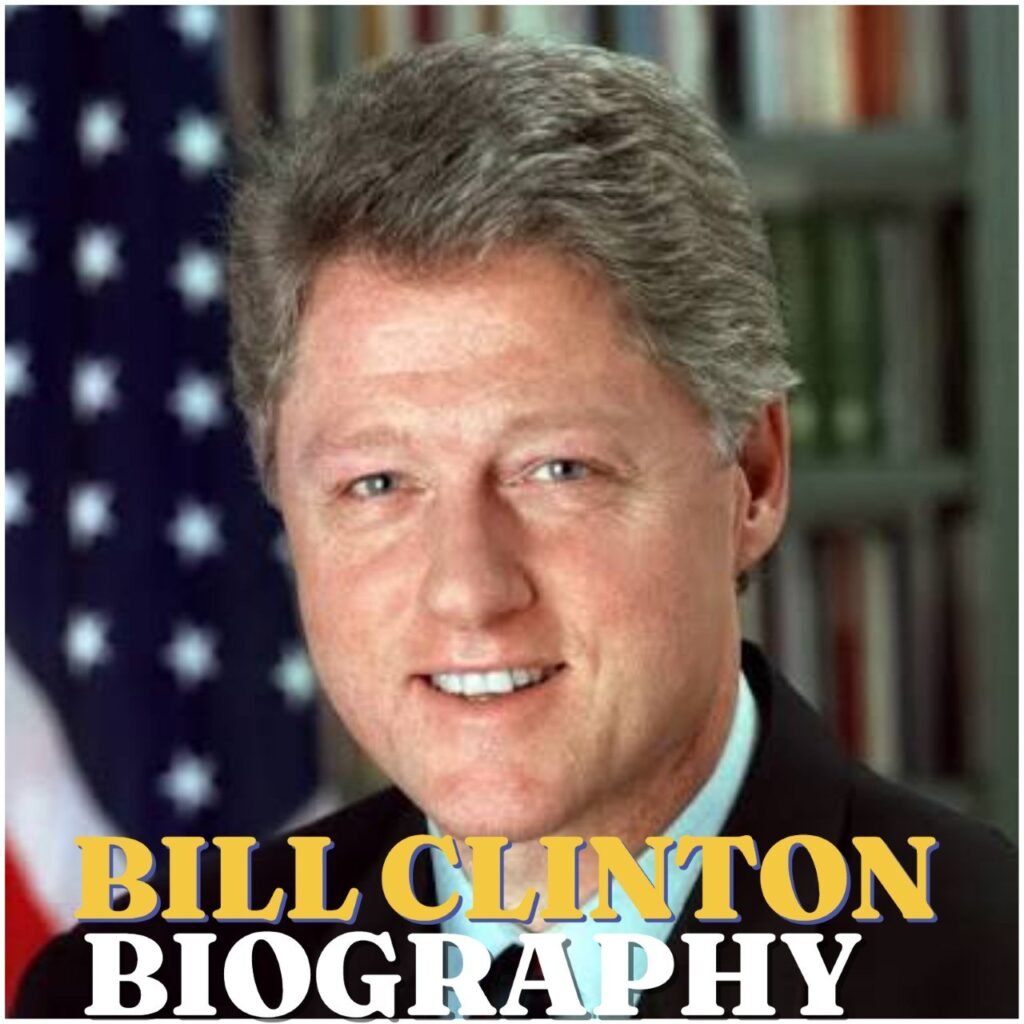

Who Is Bill Clinton?
Bill Clinton is an American politician, lawyer and former president of the United States. He served as the country’s 42nd president from 1993 to 2001. During his eight years in office, the United States experienced strong economic growth, major policy changes and important developments in international relations. His presidency also faced serious political controversies that continue to attract public attention.
Born William Jefferson Blythe III, Clinton grew up in Arkansas. His early life was shaped by family challenges, education and a growing interest in public service. He studied at Georgetown University, the University of Oxford and Yale Law School before beginning his political career. His journey took him from state politics to the highest political office in America.
Clinton remains one of the most discussed former American presidents. Some people remember his administration for economic growth, job creation and diplomatic efforts. Others focus on his controversial policies and the scandal that led to his impeachment. His story offers a look at political ambition, leadership, public service and the challenges that come with life in the public eye.
Bill Clinton’s Early Life and Family Background
Bill Clinton was born on August 19, 1946, in Hope, Arkansas, United States. His birth name was William Jefferson Blythe III. His father, William Jefferson Blythe Jr., died in a car accident before Clinton was born. As a result, Clinton grew up without knowing his biological father.
His mother, Virginia Dell Cassidy, raised him during his early years. She later married Roger Clinton Sr., a car dealer from Hot Springs, Arkansas. The family moved to Hot Springs, where Clinton spent much of his childhood. He eventually adopted his stepfather’s surname and became known as William Jefferson Clinton.
His childhood was not always easy. His stepfather struggled with alcohol, and the family experienced periods of tension. Despite these difficulties, Clinton remained close to his mother and developed an interest in reading, music and public affairs. He also learned to play the saxophone, an interest that stayed with him throughout his life.
Bill Clinton’s Education and Early Interests
Clinton attended public schools in Hot Springs, Arkansas. He was an active student who enjoyed music, debate and leadership activities. Although he showed an early interest in politics, he also considered becoming a professional musician because of his love for the saxophone.
A major turning point came in 1963 when he attended Boys Nation in Washington, D.C. During the visit, he met President John F. Kennedy at the White House. The experience left a lasting impression on him and strengthened his desire to enter public service. He also followed the civil rights movement and admired the speeches of Martin Luther King Jr.
After high school, Clinton enrolled at Georgetown University in Washington, D.C. He graduated in 1968 with a degree in international affairs. While studying, he worked as an intern in the office of Senator J. William Fulbright of Arkansas. This experience introduced him to the workings of government and international politics.
Clinton later received a Rhodes Scholarship to study at the University of Oxford in England. He attended Oxford from 1968 to 1970. After returning to the United States, he enrolled at Yale Law School and earned his law degree in 1973. It was there that he met Hillary Rodham, who later became his wife and a major figure in American politics.
Bill Clinton’s Political Career Before the Presidency
His First Political Campaign
After graduating from Yale Law School, Clinton returned to Arkansas. He began teaching law at the University of Arkansas while preparing for a career in politics.
In 1974, he ran for a seat in the United States House of Representatives. His opponent was Republican Congressman John Paul Hammerschmidt. Clinton lost the election, but the campaign gave him valuable experience and helped him build relationships with voters and political leaders.
Rather than abandon politics, he continued working towards public office. His determination soon opened another opportunity.
Becoming Arkansas Attorney General
In 1976, Clinton ran for attorney general of Arkansas and won. The position made him the state’s chief legal officer and gave him experience in government, law enforcement and public administration.
His work helped strengthen his political profile. He also became more familiar with the challenges facing the state and developed relationships that would support his future campaigns.
Becoming Governor of Arkansas
Clinton’s next major step came in 1978, when he ran for governor of Arkansas. He won the election at just 32 years old, becoming one of the youngest governors in American history.
During his first term, he focused on education, economic development and government reform. However, some decisions attracted public criticism. Changes to vehicle registration fees, in particular, became unpopular among voters. In 1980, he lost his re-election campaign to Republican Frank D. White.
The defeat was a major setback, but Clinton did not leave politics. He returned to the campaign trail and won the governorship again in 1982. He went on to serve several more terms, remaining in office until January 1993.
As governor, Clinton supported changes to public education, teacher training and school standards. He also worked to attract businesses and investment to Arkansas. Hillary Rodham Clinton played an active role in education reform during this period.
His years in state government gave him valuable political experience and helped him develop a national reputation. By the early 1990s, he had become a leading figure in the Democratic Party.
Bill Clinton’s Presidential Campaign and Election Victory
By 1992, Clinton had built a strong political profile. He presented himself as a modern Democrat who could appeal to a broad range of American voters. His approach became associated with the New Democrat movement, which sought to combine traditional Democratic priorities with more moderate economic and social policies.
He entered the Democratic presidential race and eventually secured the party’s nomination. The campaign was not without challenges. Questions about his personal life and past decisions attracted media attention, but he continued to focus on the economy, education and healthcare.
Clinton selected Senator Al Gore of Tennessee as his running mate. Together, they campaigned on the need for economic change and stronger opportunities for American families. One memorable campaign phrase was “It’s the economy, stupid,” which reflected the importance of economic concerns to voters.
In the general election, Clinton defeated incumbent Republican President George H. W. Bush and independent candidate Ross Perot. He took office on January 20, 1993, becoming the 42nd president of the United States.
Bill Clinton’s Presidency and Major Achievements
Economic Growth and Federal Budget Surpluses
The economy was one of the central issues of Clinton’s presidency. His administration introduced tax and spending policies aimed at reducing the federal deficit. These efforts contributed to federal budget surpluses in several years, beginning in 1998.
The United States also experienced a long period of economic expansion. Unemployment declined, businesses created jobs and the technology sector grew rapidly. The growth was supported by several factors, including private investment, technological progress, international trade and government policy.
Clinton’s economic record remains an important part of his legacy. Supporters credit his administration with helping to strengthen the economy. Other observers point to wider economic conditions and decisions made by businesses, consumers and previous administrations.
Welfare Reform
One of the most significant domestic policy changes during Clinton’s second term was welfare reform. In 1996, he signed the Personal Responsibility and Work Opportunity Reconciliation Act into law.
The legislation changed the federal welfare system. It gave states greater control over assistance programmes and introduced work requirements and time limits for many recipients.
Supporters argued that the changes encouraged employment and reduced long-term dependence on government assistance. Critics, however, raised concerns about the effect on low-income families and people who faced barriers to finding work. The law remains part of wider debates about poverty and social protection in the United States.
Education and Healthcare
Clinton made education and healthcare important parts of his domestic agenda. His administration supported efforts to improve school standards, increase accountability and expand educational opportunities.
Healthcare reform was another major priority. During his first term, the administration introduced a proposal designed to expand health insurance coverage for Americans. First Lady Hillary Clinton played a leading role in developing the plan.
However, the proposal faced strong opposition and failed to pass Congress. Although the larger reform effort did not succeed, the administration continued to support other health initiatives, including efforts to expand insurance coverage for children from low-income families.
Crime and Gun Legislation
In 1994, Clinton signed the Violent Crime Control and Law Enforcement Act. The law provided funding for additional police officers, crime prevention programmes and prison construction. It also included a federal ban on certain assault weapons.
The legislation remains controversial. Supporters point to its investment in policing and public safety. Critics argue that some of its provisions contributed to mass incarceration and had a disproportionate effect on disadvantaged communities.
International Relations and Peace Efforts
Foreign policy played an important role during Clinton’s presidency. His administration worked on international security, trade negotiations and diplomatic efforts in several regions.
One major development was the Dayton Peace Accords, signed in 1995. The agreement brought an end to the Bosnian War and established a framework for peace in Bosnia and Herzegovina. The United States played a central role in the negotiations.
Clinton’s administration also became involved in the Kosovo conflict. In 1999, NATO launched an air campaign against Yugoslavia during the crisis. The intervention remains a subject of political and historical debate.
In the Middle East, Clinton hosted negotiations between Israeli and Palestinian leaders. Although the talks did not produce a lasting peace agreement, they represented an important period of diplomatic engagement.
He also supported the Northern Ireland peace process. The Good Friday Agreement was signed in 1998 and created a framework for political cooperation. It helped bring decades of conflict closer to an end.
Trade and Globalisation
Clinton supported international trade and economic cooperation. His administration helped secure the North American Free Trade Agreement, commonly known as NAFTA, which took effect in 1994. The agreement reduced trade barriers between the United States, Canada and Mexico.
He also supported normalising trade relations with China, paving the way for its entry into the World Trade Organization in 2001. These policies reflected his belief in a more connected global economy.
However, trade agreements attracted criticism. Supporters argued that they opened markets and created economic opportunities. Critics worried about job losses, wage pressure and the effect of international competition on American workers.
Bill Clinton’s Re-election and Second Term
In 1996, Clinton sought a second term in office. He faced Republican candidate Bob Dole and campaigned on economic growth, education and the policies introduced during his first term.
Clinton won the election and became the first Democratic president since Franklin D. Roosevelt to secure two consecutive terms. His victory showed that he had maintained significant support among American voters.
However, his second term also brought serious political challenges. Investigations into the Clintons’ investment in the Whitewater real estate venture continued. Other controversies placed the administration under intense public scrutiny.
The most widely known scandal involved Monica Lewinsky, a former White House intern. The revelations became a major national story in 1998 and led to investigations into whether Clinton had lied under oath and obstructed justice.
Bill Clinton’s Impeachment and the Monica Lewinsky Scandal
The Monica Lewinsky scandal became one of the most defining events of Clinton’s presidency. Lewinsky had worked as an intern at the White House and later acknowledged having a sexual relationship with the president.
Clinton initially denied having a sexual relationship with her. However, evidence later emerged that contradicted his public statements. The controversy led to an investigation by independent counsel Kenneth Starr.
In December 1998, the House of Representatives impeached Clinton on charges of perjury and obstruction of justice. He became the second American president to be impeached, following Andrew Johnson.
The case then moved to the United States Senate for trial. In February 1999, the Senate acquitted Clinton on both charges because neither received the two-thirds vote required for conviction.
Clinton remained in office and completed his second term. He later apologised publicly for his conduct. The scandal damaged public confidence in the presidency and remains a major part of his political history.
Bill Clinton’s Life After the White House
Clinton left the White House on January 20, 2001, after completing two terms. However, he did not withdraw from public life. Instead, he turned much of his attention towards humanitarian work, international development and public speaking.
In 2001, he established the William J. Clinton Foundation, commonly known as the Clinton Foundation. The organisation works on issues such as public health, economic opportunity, climate change and community development.
One of its best-known initiatives is the Clinton Global Initiative. It brings together political leaders, business executives, philanthropists and representatives of civil society to discuss practical responses to global challenges.
Clinton also worked with former President George H. W. Bush on disaster relief. Their joint efforts included fundraising following the 2004 Indian Ocean tsunami and Hurricane Katrina in 2005.
In 2009, Clinton became the United Nations Special Envoy to Haiti. He worked with international organisations and development partners on recovery and economic development following the country’s devastating earthquake.
He has continued to deliver speeches, attend international conferences and participate in charitable events. These activities have kept him involved in public affairs long after his presidency ended.
Why Bill Clinton Remains in the Public Eye
Bill Clinton continues to attract public attention because of his place in American political history and his ongoing involvement in public affairs. His speeches, charitable work and appearances at international events often bring renewed attention to his career.
Through the Clinton Foundation and the Clinton Global Initiative, he continues to support discussions about public health, education, economic development and international cooperation. These projects bring together people from government, business and civil society.
His presidency also remains a subject of discussion among historians, journalists and political commentators. The economic growth of the 1990s, his foreign policy decisions, welfare reform and impeachment continue to shape conversations about his record. This combination of public service and controversy keeps his name relevant in American political life.
Bill Clinton’s Personal Life and Marriage to Hillary Clinton
Bill Clinton married Hillary Rodham on October 11, 1975. The two met while studying at Yale Law School. Their shared interest in law, politics and public service helped form the foundation of their relationship.
Hillary became an important part of Clinton’s political journey. She supported his campaigns and served as First Lady of Arkansas before becoming First Lady of the United States. After his presidency, she built her own political career, serving as a United States senator and Secretary of State. She also became the Democratic Party’s presidential nominee in 2016.
Their marriage has faced considerable public pressure, particularly during the Monica Lewinsky scandal. Despite the intense attention and controversy, they remained married and continued their involvement in public life.
Bill Clinton’s Children and Family
Bill and Hillary Clinton have one daughter, Chelsea Clinton. She was born on February 27, 1980, in Little Rock, Arkansas, while her father was serving as governor.
Chelsea spent much of her childhood in the public eye, especially during her father’s presidency. Her parents made efforts to protect her privacy while she was growing up in the White House.
As an adult, Chelsea became involved in public health, education and philanthropy. She has worked with the Clinton Foundation and co-authored several books. She is married to investment banker Marc Mezvinsky, and they have three children.
Through Chelsea, Bill Clinton is also a grandfather. Although his political career has often attracted more attention, his family remains an important part of his personal life.
Bill Clinton’s Age, Nationality, Religion, Ethnicity and Height
Bill Clinton was born on August 19, 1946, in Hope, Arkansas, United States. He turned 80 in August 2026 and holds American nationality.
His family background includes European ancestry, with roots commonly traced to English, Scottish and Irish heritage. He is generally identified as White American.
Clinton was raised in the Baptist Christian tradition and has publicly identified with the Baptist faith. His religious background has appeared in some of his public speeches and comments about faith and community.
He is approximately 6 feet 2 inches tall, or 188 centimetres. He is recognised by his tall frame, grey hair and distinctive speaking style. His appearance has changed with age, but he remains familiar to audiences around the world.
Bill Clinton’s Social Media Presence
Bill Clinton maintains a public presence through online platforms and the Clinton Foundation. His public communications focus on speeches, charitable projects, international development and events connected to his post-presidential work.
The foundation also uses social media to share updates about its programmes and activities. Readers looking for his latest statements should check verified accounts and official foundation channels to avoid confusing them with unofficial fan pages.
Bill Clinton’s Net Worth
Bill Clinton’s exact net worth is not confirmed through a complete, independently verified public financial statement. Several websites publish estimates, but their figures vary. It is therefore difficult to give a precise figure with confidence.
After leaving the White House, Clinton earned substantial income through public speaking, book deals and other professional activities. His memoir, My Life, was published in 2004 and became a commercial success. He has also received fees for speeches at corporate, academic and international events.
His wife, Hillary Clinton, has earned income through her own books, speaking engagements and public career. However, their combined finances should not be confused with Bill Clinton’s individual wealth. Without a reliable current disclosure, any exact net-worth figure should be treated as an estimate.
Bill Clinton’s Legacy and Influence
Bill Clinton’s legacy is closely linked to the economic expansion of the 1990s. During his presidency, the United States experienced job growth, lower unemployment and federal budget surpluses. His administration also introduced major changes to welfare policy and supported international trade agreements.
His foreign policy record includes involvement in the Dayton Peace Accords, the Northern Ireland peace process and diplomatic efforts in the Middle East. After leaving office, he continued working on global health, humanitarian support and economic development through the Clinton Foundation.
However, his legacy is not without controversy. The Monica Lewinsky scandal and his impeachment raised lasting questions about presidential conduct and public trust. His policies on welfare, crime and trade also continue to attract debate. His place in history is therefore shaped by both his administration’s achievements and the decisions that drew criticism.
Conclusion
Bill Clinton’s journey from Hope, Arkansas, to the White House remains one of the most recognised stories in modern American politics. He served two terms as president, led the country through a period of economic expansion and took part in major international diplomatic efforts. His life after office has also included humanitarian work, public speaking and global development projects. At the same time, his presidency faced controversies that continue to influence how people view his leadership. His story reflects the opportunities, pressures and responsibilities that come with political power.
Frequently Asked Questions About Bill Clinton
Who is Bill Clinton?
Bill Clinton is an American politician and lawyer who served as the 42nd president of the United States from 1993 to 2001.
How old is Bill Clinton?
Bill Clinton was born on August 19, 1946. He turned 80 years old in August 2026.
Where was Bill Clinton born?
He was born in Hope, Arkansas, in the United States.
What was Bill Clinton’s birth name?
His birth name was William Jefferson Blythe III. He later adopted the surname of his stepfather, Roger Clinton Sr.
Who is Bill Clinton’s wife?
Bill Clinton is married to Hillary Rodham Clinton. They married on October 11, 1975.
How many children does Bill Clinton have?
Bill Clinton has one daughter, Chelsea Clinton.
What political party does Bill Clinton belong to?
Bill Clinton is a member of the Democratic Party.
How long did Bill Clinton serve as president?
He served two terms, from January 20, 1993, to January 20, 2001.
Why was Bill Clinton impeached?
The House of Representatives impeached Clinton in December 1998 on charges of perjury and obstruction of justice connected to the Monica Lewinsky scandal. The Senate acquitted him in February 1999.
What did Bill Clinton do after leaving office?
After leaving the White House, he established the Clinton Foundation, supported humanitarian and development projects, delivered public speeches and participated in international initiatives.
What is Bill Clinton’s religion?
Clinton was raised in the Baptist Christian tradition and has publicly identified with the Baptist faith.
How tall is Bill Clinton?
Bill Clinton is approximately 6 feet 2 inches tall, or 188 centimetres.
What is Bill Clinton’s net worth?
His exact net worth has not been independently confirmed. He has earned income through book deals, public speaking and other professional activities.