
Introduction
Abdul El-Sayed is an American physician, public health expert, author and politician. He became widely known for his work in public health and his efforts to make healthcare more accessible. Over the years, he has built a career that connects medicine, government service and political activism.
Born and raised in Michigan, El-Sayed has spent much of his professional life working to improve the health and living conditions of ordinary people. He served as the executive director of the Detroit Health Department and later led the Wayne County Department of Health, Human and Veterans Services. His experience in these roles helped him develop a strong interest in public policy and healthcare reform.
His political journey reached a major turning point in November 2026 when he won Michigan’s U.S. Senate election. His victory over Republican candidate Mike Rogers made him the first Muslim American elected to the United States Senate. This historic achievement brought national attention to his career and made him an important figure in American politics.
Early Life and Family Background
Abdul El-Sayed was born on October 31, 1984, in Michigan, United States. He grew up in the Detroit metropolitan area in a family with Egyptian roots. His father, Mohamed, immigrated to the United States from Egypt. El-Sayed was also raised with the support of his stepmother, Jackie.
Growing up in Michigan helped shape his understanding of the challenges facing working families and local communities. His Egyptian-American background also gave him a connection to different cultures and experiences. These influences later became part of his public identity and his approach to politics.
El-Sayed developed an interest in education, public service and community development from an early age. Although he initially focused on becoming a doctor, his experiences eventually led him to explore how government decisions affect people’s health. This interest became a major part of his work as a physician, public health leader and politician.
Education
El-Sayed attended Bloomfield Hills Andover High School in Michigan. During his school years, he took part in sports and other activities. He was particularly interested in lacrosse, and his involvement in the sport helped him develop teamwork and leadership skills.
After high school, he enrolled at the University of Michigan. He studied biology and political science, graduating in 2007 with the highest distinction. He also played on the university’s men’s lacrosse team. His academic performance earned him membership in Phi Beta Kappa, an honour society that recognises outstanding academic achievement.
After completing his undergraduate studies, El-Sayed became a Rhodes Scholar and continued his education at the University of Oxford in the United Kingdom. He earned a doctorate in public health in 2011. He later attended Columbia University, where he obtained his medical degree in 2014. His education gave him a strong foundation in medicine, research and public policy.
Career and Professional Journey
Early Career in Public Health
After completing his medical education, El-Sayed developed a career that combined medical knowledge with public health research. He worked as an assistant professor of epidemiology at Columbia University’s Mailman School of Public Health.
His academic work focused on health inequalities, healthcare systems and the social conditions that influence people’s well-being. He also contributed to research publications and became known for using scientific evidence to explain public health challenges.
His work in academia helped him understand that good healthcare involves more than treating individual patients. It also requires effective public policies, strong public institutions and equal access to essential services.
Leadership at the Detroit Health Department
In 2015, El-Sayed became the executive director of the Detroit Health Department. His appointment came after Detroit’s financial crisis, when the city was working to rebuild important public services.
He took on the responsibility of strengthening the department and improving its ability to serve residents. His work covered several areas, including disease prevention, environmental health and access to basic healthcare services.
During his time in the position, he gained recognition for his approach to public health leadership. The Michigan League of Conservation Voters named him Public Official of the Year. He also received recognition from Crain’s Detroit Business through its 40 Under 40 list.
His experience in Detroit gave him a closer understanding of how poverty, pollution and limited access to healthcare affect communities. It also strengthened his interest in using government to solve problems that directly affect people’s lives.
2018 Michigan Gubernatorial Campaign
In 2018, El-Sayed entered politics by running for governor of Michigan as a Democratic candidate. His campaign focused on healthcare reform, clean water, affordable education and renewable energy.
He supported policies aimed at making healthcare available to everyone, reducing the influence of wealthy interests in politics and improving public services. His campaign attracted support from progressive political figures, including Bernie Sanders and Alexandria Ocasio-Cortez.
Although he gained considerable attention, El-Sayed finished second in the Democratic primary. He did not win the party’s nomination, but the campaign helped introduce him to a wider national audience.
The experience also gave him a platform to continue discussing healthcare reform and economic fairness.
Wayne County Public Health Leadership
In 2022, El-Sayed became director and health officer of the Wayne County Department of Health, Human and Veterans Services. The department serves a large population across one of Michigan’s most diverse counties.
He worked on public health programmes and policies designed to improve residents’ access to essential services. His responsibilities included overseeing health initiatives and supporting efforts to address problems such as medical debt, environmental risks and unequal access to healthcare.
He held the position until 2025. The experience added to his record in public administration and strengthened his reputation as a public health professional with practical government experience.
Writing, Media and Public Advocacy
Beyond his work in government and medicine, El-Sayed has also built a career as an author and media personality. He wrote Healing Politics: A Doctor’s Journey into the Heart of Our Political Epidemic. In the book, he explores the connection between political divisions, public health and the problems affecting American society.
He also co-authored Medicare for All: A Citizen’s Guide with Micah Johnson. The book explains the idea of universal healthcare and discusses how a healthcare system could provide affordable medical services to everyone.
El-Sayed also hosted America Dissected, a podcast produced by Crooked Media. Through the programme, he discussed health, politics and social issues. His writing and media work helped him reach people beyond the academic and political communities.
Why Abdul El-Sayed Is Trending: Historic 2026 Senate Election Victory
Abdul El-Sayed made national headlines after winning Michigan’s U.S. Senate election on November 3, 2026. He defeated Republican candidate Mike Rogers in a closely watched contest.
His victory was significant for two major reasons. First, it secured a major political position for a candidate who had built his career around progressive healthcare and economic policies. Second, it made him the first Muslim American elected to the United States Senate.
The election attracted national attention because El-Sayed had previously lost the 2018 Democratic gubernatorial primary. His successful Senate campaign showed how his political career had developed over the years. It also highlighted the growing influence of progressive candidates in American politics.
Following the election, El-Sayed became senator-elect. His victory marked a new chapter in his public service career, moving him from local and county-level leadership to the national legislature. His performance in the Senate will be closely watched, particularly on healthcare reform, economic issues and the role of government in supporting working families.
Personal Life and Family
Abdul El-Sayed is married to Sarah Jukaku, a physician who works in mental health. The couple met while studying at the University of Michigan. Their shared interest in education and healthcare has been an important part of their relationship.
They have two daughters, Emmalee and Serene. El-Sayed has spoken about his family as an important source of support and motivation. His experiences as a husband and father have also shaped how he discusses the future of American families and the need for affordable healthcare.
Despite his public responsibilities, El-Sayed keeps much of his family life private. He lives in Ann Arbor, Michigan, with his wife and children. His family remains an important part of his personal life as he begins a new chapter in national politics.
Abdul El-Sayed’s Age, Religion, Nationality, Tribe and Physical Appearance
Abdul El-Sayed was born on October 31, 1984. As of November 2026, he is 42 years old. He is an American citizen with Egyptian heritage. His background reflects his family’s connection to both Egypt and the United States.
El-Sayed is Muslim. His faith is part of his personal background, and his election to the Senate has attracted attention because he will become the first Muslim American to serve in that chamber. His ethnic and cultural background is Egyptian-American. A specific tribal affiliation has not been publicly established, and there is no reliable public information confirming his height.
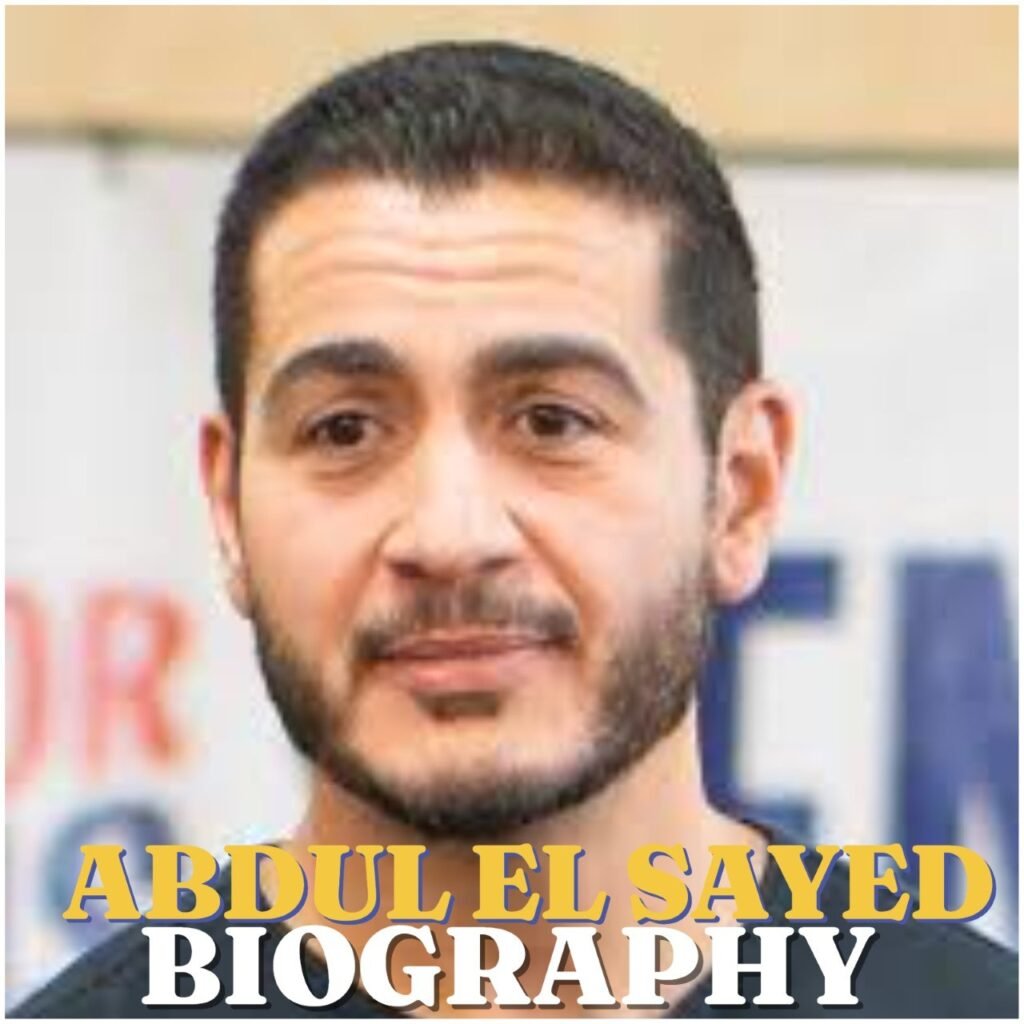
He has a professional appearance that suits his work in public service and politics. He is often seen wearing formal suits during interviews, public appearances and campaign events. His public image reflects his background as a physician, academic and political leader.
Social Media Presence
Abdul El-Sayed uses social media to communicate with supporters, share political updates and discuss issues affecting American communities. His posts often cover healthcare, public policy, political campaigns and his work in public service.
He is active on Instagram through @abdulelsayed and on X through @AbdulElSayed. These platforms allow him to share updates about his activities and connect with people who follow his political journey.
His social media presence became especially important during the 2026 Senate campaign. It helped him communicate his message, promote campaign events and engage with voters across Michigan.
Abdul El-Sayed’s Net Worth
Abdul El-Sayed’s exact net worth has not been publicly confirmed. There is no reliable financial disclosure that establishes his total personal wealth. For this reason, any specific figure presented as his confirmed net worth should be treated with caution.
His income has come from several professional activities. These include his work as a physician, academic, public health administrator, author and media host. His books, speaking engagements and other professional activities may also contribute to his earnings.
His election to the United States Senate represents a new stage in his career, but it does not provide enough information to determine his personal wealth. His financial position should therefore be understood through his professional background rather than an unsupported estimate.
Legacy and Influence
Abdul El-Sayed has built a career around the belief that healthcare and public policy should improve people’s everyday lives. His work in Detroit and Wayne County gave him practical experience in managing public health services and addressing community needs.
His academic and writing contributions have also helped bring public attention to healthcare inequalities and the relationship between politics and health. Through his books, research and podcast, he has encouraged discussions about how government decisions affect ordinary people.
His 2026 Senate victory added a historic achievement to his career. As the first Muslim American elected to the United States Senate, he has become an important figure for many people who want to see broader representation in American political institutions. His long-term legacy will depend on the work he does in office and the impact of the policies he supports.
Conclusion
Abdul El-Sayed is a physician, public health expert, author and politician whose career has grown from academic research to government leadership and national politics. His work in Detroit and Wayne County gave him valuable experience in public service, while his campaigns and writing brought his ideas to a wider audience. His victory in Michigan’s 2026 Senate election marked a historic moment in American politics. As he prepares to serve in the Senate, many people will be watching how he uses his medical knowledge and public service experience to address the country’s challenges.
Frequently Asked Questions About Abdul El-Sayed
1. Who is Abdul El-Sayed?
Abdul El-Sayed is an American physician, epidemiologist, author and politician. He previously led public health departments in Detroit and Wayne County and won Michigan’s 2026 U.S. Senate election.
2. How old is Abdul El-Sayed?
Abdul El-Sayed is 42 years old as of November 2026. He was born on October 31, 1984.
3. Where was Abdul El-Sayed born?
He was born in Michigan, United States, and grew up in the Detroit metropolitan area.
4. What is Abdul El-Sayed’s nationality?
He is American and has Egyptian family heritage.
5. What is Abdul El-Sayed’s religion?
Abdul El-Sayed is Muslim.
6. Who are Abdul El-Sayed’s parents?
His father is named Mohamed, an Egyptian immigrant. He was also raised with the support of his stepmother, Jackie.
7. Is Abdul El-Sayed married?
Yes. He is married to Sarah Jukaku, a physician who works in mental health.
8. Who is Abdul El-Sayed’s wife?
His wife is Sarah Jukaku. They met while studying at the University of Michigan.
9. Does Abdul El-Sayed have children?
Yes. He has two daughters named Emmalee and Serene.
10. What did Abdul El-Sayed study?
He studied biology and political science at the University of Michigan. He later earned a doctorate in public health from the University of Oxford and a medical degree from Columbia University.
11. Is Abdul El-Sayed a doctor?
Yes. He is a physician and holds a medical degree from Columbia University.
12. What political party does Abdul El-Sayed belong to?
He is a member of the Democratic Party.
13. Did Abdul El-Sayed win the 2026 Michigan Senate election?
Yes. He defeated Republican candidate Mike Rogers in the November 3, 2026, election.
14. Why is Abdul El-Sayed’s Senate victory historic?
His victory made him the first Muslim American elected to the United States Senate.
15. What position did Abdul El-Sayed hold in Detroit?
He served as the executive director of the Detroit Health Department, where he worked to strengthen public health services.
16. Did Abdul El-Sayed run for governor of Michigan?
Yes. He ran in the 2018 Democratic gubernatorial primary but finished second.
17. What books has Abdul El-Sayed written?
His books include Healing Politics: A Doctor’s Journey into the Heart of Our Political Epidemic and Medicare for All: A Citizen’s Guide, which he co-wrote with Micah Johnson.
18. What is Abdul El-Sayed’s net worth?
His exact net worth is not publicly confirmed. His professional income has come from medicine, academia, public service, writing and media work.
19. What is Abdul El-Sayed’s height?
His height has not been reliably confirmed in publicly available information.