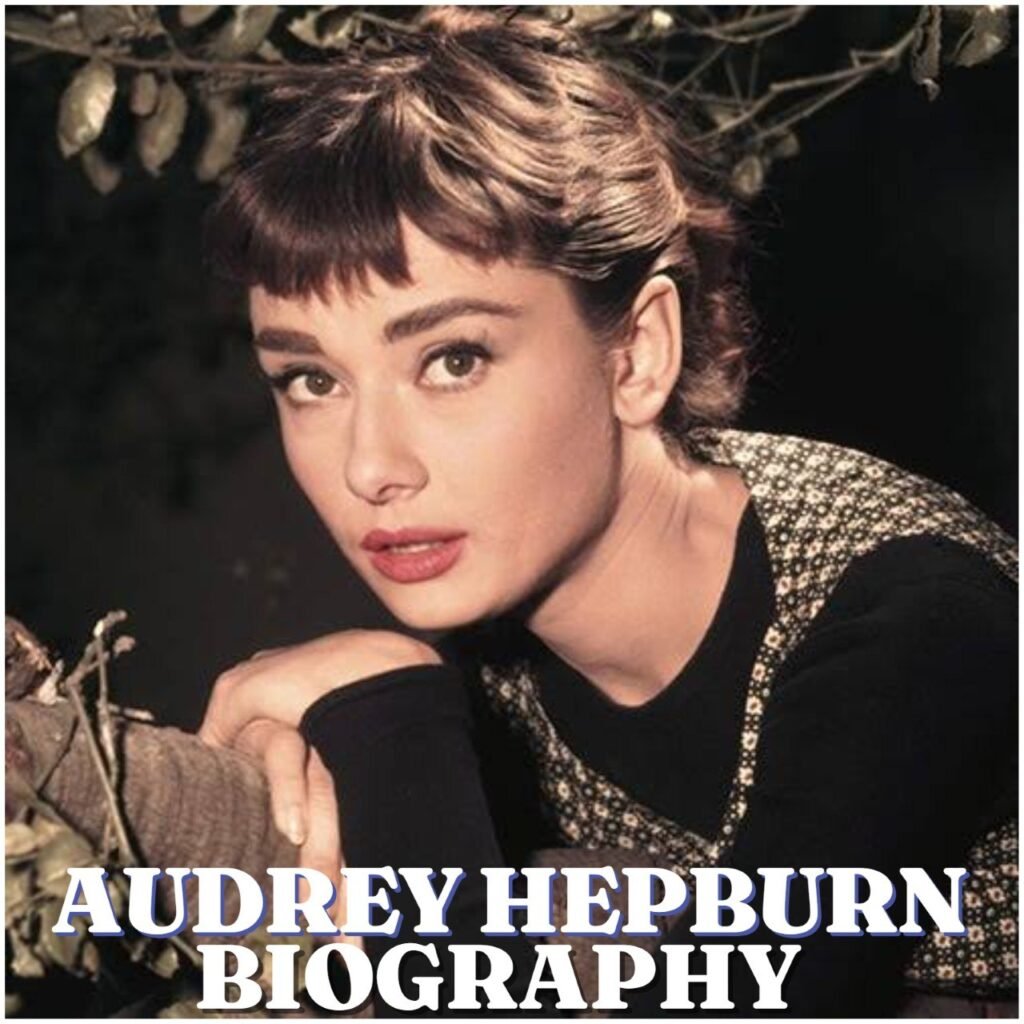

Introduction to Audrey Hepburn’s Biography
Audrey Hepburn was one of the most celebrated actresses of Hollywood’s Golden Age, admired for her elegance, natural beauty, remarkable acting talent, and timeless fashion sense. Born Audrey Kathleen Hepburn on May 4, 1929, in Ixelles, Brussels, Belgium, she became an international star whose influence extended far beyond the entertainment industry. She gained worldwide recognition for her memorable performances in classic films such as *Roman Holiday*, *Sabrina*, *Breakfast at Tiffany’s*, and *My Fair Lady*. Her distinctive personality, graceful screen presence, and ability to portray both vulnerability and strength helped establish her as one of the most beloved actresses in cinema history.
Beyond her success in films, Audrey Hepburn became a global fashion icon whose style continues to inspire designers, celebrities, and fashion enthusiasts. Her collaboration with French fashion designer Hubert de Givenchy produced some of the most recognizable looks in film and popular culture, particularly her famous black dress in *Breakfast at Tiffany’s*. Throughout her career, she received numerous prestigious awards, including an Academy Award for Best Actress for her performance in *Roman Holiday* in 1954. Despite her international fame, Hepburn was widely remembered for her modest personality, dedication to her family, and preference for a relatively private life away from the pressures of celebrity culture.
In the later years of her life, Audrey Hepburn devoted much of her time to humanitarian activities, serving as a Goodwill Ambassador for UNICEF and visiting communities affected by poverty, hunger, and humanitarian emergencies. Her experiences during the Second World War helped shape her compassion for vulnerable children and families, motivating her to use her fame to raise awareness of their needs. Although she died on January 20, 1993, at the age of 63, her contributions to cinema, fashion, and humanitarian work remain influential. Renewed interest in her life, including the 2026 publication of *Intimate Audrey: An Authorized Biography*, continues to introduce new generations to the remarkable story of a woman whose legacy combines artistic achievement with compassion and service.
Early Life of Audrey Hepburn
Audrey Hepburn was born Audrey Kathleen Hepburn on May 4, 1929, in Ixelles, Brussels, Belgium, into a family with international connections. Her father, Joseph Victor Anthony Ruston, was British, while her mother, Ella van Heemstra, was a Dutch baroness from an aristocratic family. Because of her parents’ backgrounds and her father’s work, Hepburn spent parts of her early childhood moving between countries, including Belgium, England, and the Netherlands. Her upbringing exposed her to different languages and cultures, helping shape the international outlook that later became part of her identity. Although her family enjoyed certain social privileges, her childhood was not always stable, and her parents’ marriage eventually broke down.
During her early years, Hepburn developed a strong interest in music, dance, and the performing arts. She attended school in England before continuing her education in the Netherlands, where she lived with her mother during the Second World War. The German occupation of the Netherlands deeply affected her childhood, exposing her to hunger, fear, and the hardships experienced by ordinary families during wartime. Food shortages and the difficult conditions of the occupation had lasting effects on her health and outlook on life. These experiences helped develop her empathy for people facing suffering and deprivation, a quality that became particularly evident in her later humanitarian work with UNICEF.
After the war, Audrey Hepburn pursued ballet training and hoped to become a professional dancer. She studied ballet in Amsterdam and later continued her training in London, where she worked hard to develop her technique and stage presence. Although she possessed grace and determination, the physical effects of wartime malnutrition made it difficult for her to pursue the demanding career she had originally envisioned. She subsequently began exploring opportunities in theatre, modelling, and film, taking small roles that gradually introduced her to the entertainment industry. These early experiences laid the foundation for her eventual breakthrough in *Roman Holiday* in 1953, the film that transformed her into an international star and established her as one of the most memorable actresses of her generation.
Education of Audrey Hepburn
Audrey Hepburn received her early education in both Belgium and England because of her family’s international background. During her childhood, she attended schools where she developed an interest in languages, music, and the performing arts. Her education was interrupted by the circumstances surrounding the Second World War, when she moved to the Netherlands to live with her mother. Despite the difficulties of wartime life, Hepburn continued learning and developing the personal discipline that would later support her acting career. Her exposure to different cultures and educational environments helped shape her worldview and contributed to the poise and adaptability that became defining characteristics of her public image.
During her years in the Netherlands, Hepburn continued her studies while pursuing her growing passion for ballet. She received ballet instruction in Arnhem and later studied in Amsterdam under the guidance of Sonia Gaskell, a respected dance instructor. Ballet became an important part of her early development because it taught her discipline, concentration, physical coordination, and expressive movement. These skills eventually proved valuable when she entered the film industry, where her graceful movements and expressive performances distinguished her from many other actresses. However, the malnutrition she experienced during the German occupation affected her physical strength and limited her prospects of becoming a professional ballet dancer at the highest level.
After the war, Hepburn continued her ballet training in London, studying under Marie Rambert, an influential ballet teacher who had trained many aspiring dancers. Although Hepburn worked diligently, she was advised that her height, physical condition, and the effects of wartime malnutrition would make it difficult for her to achieve her ambitions as a leading ballerina. Rather than abandoning her artistic interests, she began exploring modelling, theatre, and acting, gradually building experience through stage performances and small film roles. Audrey Hepburn did not become famous through a conventional university education; instead, her professional training in ballet, practical experience, and determination helped prepare her for a successful career in cinema, ultimately leading to her Academy Award-winning performance in *Roman Holiday* in 1953.
Career of Audrey Hepburn
Audrey Hepburn built an extraordinary career as an actress, fashion icon, and humanitarian, becoming one of the most recognizable stars in the history of international cinema. Her journey into entertainment began with ballet training and modelling before she secured small roles in European films. In the early 1950s, she appeared in productions that helped her gain experience and attract the attention of filmmakers. Her natural charm, expressive eyes, graceful movements, and distinctive screen presence quickly set her apart from other aspiring performers. Unlike many actresses whose fame developed gradually over several years, Hepburn experienced a major breakthrough early in her film career, establishing herself as a promising talent whose performances appealed to audiences across different countries.
Audrey Hepburn’s Breakthrough with Roman Holiday
Hepburn’s career changed dramatically in 1953 when she starred opposite Gregory Peck in the romantic comedy *Roman Holiday*. She played Princess Ann, a royal who escapes her official responsibilities to experience an ordinary day in Rome. Her performance received widespread acclaim for its warmth, humour, and emotional sincerity. In 1954, she won the Academy Award for Best Actress for the role, making an impressive entrance into Hollywood’s elite circle. The film also earned her international recognition and established her as a fresh alternative to the more conventional leading ladies of the era. Her success demonstrated that she could carry a major motion picture through personality, emotional depth, and acting ability rather than relying solely on glamour.
Success in Hollywood and Classic Films
Following the success of *Roman Holiday*, Hepburn continued to build her reputation through a series of memorable performances. In 1954, she starred in *Sabrina*, directed by Billy Wilder, alongside Humphrey Bogart and William Holden. Her portrayal of Sabrina Fairchild, a chauffeur’s daughter who returns from Paris with newfound confidence, further strengthened her popularity. She received another Academy Award nomination for the role, while her elegant wardrobe helped establish her as a leading fashion influence. Hepburn subsequently appeared in films such as *War and Peace* (1956), *Funny Face* (1957), and *Love in the Afternoon* (1957), demonstrating her versatility across romantic comedy, drama, and musical productions.
Breakfast at Tiffany’s and International Stardom
One of Audrey Hepburn’s most iconic performances came in *Breakfast at Tiffany’s* (1961), in which she portrayed Holly Golightly, a young woman navigating love, independence, and uncertainty in New York City. The film became a cultural landmark, and Hepburn’s portrayal of Holly remains one of the most recognizable performances in Hollywood history. Her elegant black dress, pearls, and sophisticated appearance helped establish the film as a lasting fashion reference. Hepburn received an Academy Award nomination for Best Actress for her performance, further confirming her reputation as one of the industry’s leading talents.
In 1964, Hepburn starred as Eliza Doolittle in *My Fair Lady*, the musical film adaptation of the stage production based on George Bernard Shaw’s play *Pygmalion*. Her performance demonstrated her ability to take on a demanding role involving character development, social transformation, and elaborate costumes. Although her singing voice was largely dubbed by Marni Nixon, Hepburn’s acting helped bring Eliza’s transformation from a working-class flower seller into a sophisticated society woman to the screen. The film became one of the major productions of her career and further strengthened her association with classic Hollywood cinema.
Audrey Hepburn’s Later Film Career
During the later stages of her acting career, Hepburn became more selective about her film appearances, choosing projects that interested her rather than maintaining a constant Hollywood schedule. She starred in *Wait Until Dark* (1967), a suspense thriller in which she played Susy Hendrix, a blind woman who becomes the target of dangerous criminals. Her performance earned another Academy Award nomination and demonstrated her ability to move beyond romantic roles into psychological suspense. After this film, she gradually stepped away from frequent acting work to concentrate on her personal life and family.
Hepburn returned to the screen occasionally, including appearances in *Robin and Marian* (1976), opposite Sean Connery, and *Bloodline* (1979). Her final feature-film appearance was in Steven Spielberg’s *Always* (1989), where she played an angel named Hap. Although she appeared in fewer productions during the later years of her life, her reputation as a gifted actress remained strong. Her selective approach to work reflected her changing priorities and her desire to devote more time to her family and humanitarian responsibilities.
Audrey Hepburn’s Awards and Achievements
Audrey Hepburn received numerous awards during her career, recognizing her achievements in film, television, theatre, and music. Her Academy Award for *Roman Holiday* was among the earliest and most important honours of her career. She later received additional recognition for her performances and contributions to the entertainment industry, including the Tony Award for Best Actress in a Play for *Ondine*. Her career also included an Emmy Award for her television work and a Grammy Award for her spoken-word recording for children.
Hepburn is one of the relatively small number of performers to achieve the EGOT distinction by winning competitive Emmy, Grammy, Oscar, and Tony awards. Beyond competitive awards, she received humanitarian recognition for her work with UNICEF, including the Presidential Medal of Freedom posthumously in 1993. These achievements demonstrate the breadth of her influence, from artistic excellence to charitable service, and explain why she continues to be remembered as much more than a film star.
Trending: Audrey Hepburn’s Rare Photographs, New Biography and Timeless Fashion Legacy
Audrey Hepburn continues to attract public attention in 2026, particularly because of renewed interest in her personal history, photographs, and influence on cinema and fashion. Recent features have revisited her life before fame, her years as an international star, her family experiences, and her humanitarian work. Such coverage provides readers with opportunities to learn more about the person behind the familiar Hollywood image and to discover aspects of her life that may be less widely known.
Another reason for renewed interest is the 2026 release of *Intimate Audrey: An Authorized Biography*, associated with her son Sean Hepburn Ferrer and author Wendy Holden. The book explores Hepburn’s childhood during the Second World War, her rise to international stardom, her experiences as a mother, and her humanitarian work. It includes personal recollections, photographs, and material from her letters, helping readers understand her life beyond her public image. The publication has contributed to ongoing discussions about her family relationships, personal struggles, and achievements.
Hepburn’s fashion legacy is also a continuing subject of public interest, particularly her iconic black Givenchy dress from *Breakfast at Tiffany’s*. The dress became one of the most recognizable costumes in film history, symbolizing the elegance and simplicity associated with her public image. In 2006, a version of the famous dress sold at auction for approximately $923,000, with the sale supporting charitable work for children. The auction demonstrated the continuing commercial and cultural value attached to Hepburn’s name and the lasting influence of her association with classic fashion.
Overall, renewed attention surrounding Audrey Hepburn reflects the lasting appeal of her films, personal story, and charitable achievements. From photographs and family recollections to the continued fascination with her iconic wardrobe, she remains an influential cultural figure whose legacy reaches new generations. Her enduring popularity illustrates how her contributions to cinema, fashion, and humanitarian work continue to resonate decades after her death.
Personal Life and Family of Audrey Hepburn
Audrey Hepburn’s personal life was shaped by her desire for love, stability, and a close family away from the pressures of Hollywood. She was the daughter of Joseph Victor Anthony Ruston, a British father, and Ella van Heemstra, a Dutch baroness. Her parents separated during her childhood, and the difficult experiences she faced during the Second World War influenced her outlook on relationships and family life. In 1954, Hepburn married American actor and director Mel Ferrer, whom she met while performing in the Broadway play *Ondine*. Their marriage lasted until 1968, and they welcomed their son, Sean Hepburn Ferrer, on July 17, 1960. Despite their eventual separation, motherhood became one of the most important parts of Hepburn’s life, and she made considerable efforts to provide Sean with a stable upbringing.
In 1969, Hepburn married Andrea Dotti, an Italian psychiatrist whom she had met while travelling. Their son, Luca Dotti, was born on February 8, 1970. Hepburn devoted considerable attention to raising her children and preferred a quieter family life in Europe rather than remaining constantly involved in Hollywood. However, her second marriage eventually ended in divorce in 1982. Despite the challenges in her relationships, she remained devoted to Sean and Luca, both of whom later helped preserve her memory through books and other projects. Hepburn’s family life demonstrated that, beyond her international fame and glamorous public image, she valued motherhood, privacy, and the emotional well-being of her children.
After her marriages ended, Hepburn found lasting companionship with Robert Wolders, a Dutch actor who became her partner in 1980. They remained together until her death on January 20, 1993, although they never married. In her later years, Hepburn divided her time between her family and humanitarian work, particularly her role as a UNICEF Goodwill Ambassador. Her sons subsequently continued to honour her legacy, with Sean becoming a film producer and author and Luca writing books that share memories of their mother. Hepburn also had grandchildren, including Emma Kathleen Hepburn Ferrer, who has helped maintain the family’s connection to her artistic and humanitarian heritage. Her personal story remains an important part of her biography because it reveals a woman who treasured family connections and sought a meaningful life beyond the spotlight.
Audrey Hepburn’s Age, Religion, Nationality, Health and Physical Appearance
Audrey Hepburn’s Age
Audrey Hepburn was born on May 4, 1929, in Brussels, Belgium, and died on January 20, 1993, at her home in Tolochenaz, Switzerland. She was 63 years old at the time of her death. Although she lived for just over six decades, her achievements in film, fashion, and humanitarian work secured her a lasting place in international popular culture. Her performances continue to attract audiences, while her life story remains a subject of biographies and documentaries.
Audrey Hepburn’s Religion
Audrey Hepburn did not strongly identify publicly with one particular religious tradition throughout her life. She was raised in a family with differing religious backgrounds, and her experiences during the Second World War influenced her personal beliefs and outlook on life. Biographical accounts describe her as someone who expressed a deep sense of wonder about nature and humanity rather than strict attachment to a particular religious institution. Her humanitarian work reflected values of compassion, dignity, and service to others, particularly children affected by poverty and conflict. It is therefore more accurate to describe her religious background cautiously rather than assign her a specific denomination without clear evidence.
Audrey Hepburn’s Nationality
Audrey Hepburn was born in Belgium to a British father, Joseph Victor Anthony Ruston, and a Dutch mother, Ella van Heemstra. She is widely identified as a British actress born in Belgium, and she spent important periods of her childhood in England and the Netherlands. Her multicultural upbringing helped her become comfortable in different European environments, and she became fluent in several languages. Despite her international background, she achieved worldwide recognition through British and American film productions, becoming a celebrated figure in international cinema.
Audrey Hepburn’s Health
Audrey Hepburn experienced significant health difficulties during her childhood, particularly during the German occupation of the Netherlands in the Second World War. Food shortages and severe malnutrition contributed to health problems, including anaemia and oedema. These experiences affected her physical development and contributed to the difficulties she faced while pursuing her early ambition of becoming a professional ballet dancer. In later life, she also experienced health problems, and in late 1992 she was diagnosed with a rare cancer affecting her appendix. She died in January 1993 following the illness. Her experiences of hunger and hardship helped deepen her commitment to humanitarian work with UNICEF.
Audrey Hepburn’s Physical Appearance
Audrey Hepburn was widely recognized for her distinctive facial features, expressive brown eyes, dark hair, graceful posture, and elegant personal style. She was approximately 5 feet 7 inches (170 cm) tall and had a naturally slender frame, which was particularly noticeable in her ballet-inspired movements and classic film costumes. Her appearance helped distinguish her from many other Hollywood stars of her era, while her understated elegance became closely associated with the designs of fashion designer Hubert de Givenchy. Rather than relying solely on glamorous styling, Hepburn combined simplicity, poise, and expressive acting to create a memorable screen presence. Her fashion choices, particularly her looks in *Sabrina* and *Breakfast at Tiffany’s*, continue to influence designers and fashion enthusiasts around the world.
Audrey Hepburn’s Age, Religion, Tribe, Height and Physical Appearance
Audrey Hepburn’s Age
Audrey Hepburn was born on May 4, 1929, in Ixelles, Brussels, Belgium, and died on January 20, 1993, at the age of 63. She became one of the most celebrated actresses of Hollywood’s Golden Age, earning international recognition for films such as *Roman Holiday*, *Sabrina*, and *Breakfast at Tiffany’s*. Although her life was relatively short, her contributions to cinema, fashion, and humanitarian work continue to inspire people worldwide.
Audrey Hepburn’s Religion
Audrey Hepburn’s religious background was influenced by her European upbringing and family environment. However, reliable biographical accounts do not clearly establish a specific religious denomination that she consistently identified with throughout her life. She became widely admired for her compassion, generosity, and commitment to helping vulnerable children through her work with UNICEF. It is best to avoid assigning her a particular religious affiliation without stronger evidence from trustworthy biographical records.
Audrey Hepburn’s Tribe and Ethnic Background
Audrey Hepburn was European, with a family background that included Dutch ancestry through her mother, Baroness Ella van Heemstra, and British and other Central European ancestry through her father, Joseph Victor Anthony Ruston. She was born in Belgium but is widely described as a British actress. The term “tribe” is not generally applicable to her documented background; describing her nationality and family ancestry is more accurate. Her multicultural upbringing in Belgium, England, and the Netherlands contributed to her familiarity with different European cultures and languages.
Audrey Hepburn’s Height
Audrey Hepburn was approximately 5 feet 6¾ inches (1.70 metres) tall, according to commonly published biographical information. Her background in ballet contributed to her graceful posture and controlled movements, qualities that became distinctive features of her screen performances. Her height and elegant presentation also helped her carry the sophisticated costumes designed for films such as *Sabrina* and *Funny Face*.
Audrey Hepburn’s Physical Appearance
Audrey Hepburn was renowned for her expressive eyes, dark hair, delicate facial features, and graceful presence. Her distinctive appearance helped establish a different kind of Hollywood glamour, characterized by understated elegance and sophisticated simplicity. Her collaboration with fashion designer Hubert de Givenchy produced several memorable looks, including the iconic black dress associated with *Breakfast at Tiffany’s*. Hepburn’s personal style extended beyond clothing to her poise, expressive acting, and refined screen presence. Decades after her death, she remains an influential figure in fashion history and classic cinema.
Audrey Hepburn’s Social Media Presence
Audrey Hepburn passed away on January 20, 1993, before modern social media platforms such as Instagram, Facebook, and TikTok became popular. Therefore, she did not personally maintain accounts on these platforms. However, her legacy continues to attract millions of admirers through fan communities, archival photographs, classic film clips, and accounts dedicated to celebrating her career, fashion, and humanitarian achievements.
One Instagram account associated with content about the actress is **@rareaudreyhepburn**, which shares photographs, stories, and historical material about her life and style. Readers can also find information about her legacy through the Audrey Hepburn Estate website at https://www.audreyhepburnestate.com/. When discussing social media accounts associated with her name, it is important to distinguish fan-run pages from officially authorized accounts representing her estate.
Audrey Hepburn’s continued presence across digital platforms demonstrates her enduring influence on entertainment, fashion, and humanitarian work. Her iconic looks from *Breakfast at Tiffany’s*, her award-winning performance in *Roman Holiday*, and her dedication to UNICEF continue to inspire younger generations. Although she cannot maintain personal accounts, the continuing interest in her life shows how digital communities help preserve the memory of historical figures and introduce their achievements to new audiences.
Audrey Hepburn’s Net Worth
Audrey Hepburn’s net worth at the time of her death in January 1993 has never been conclusively established through publicly verified estate records. Some online estimates place her wealth at approximately $55 million, while other sources suggest different figures. These estimates should be treated cautiously because a detailed, independently verified valuation of her estate is not readily available. Her financial legacy included the proceeds of her successful acting career, professional engagements, and personal assets accumulated over several decades.
Hepburn accumulated her wealth through a successful acting career spanning several decades. Her earnings came from acclaimed films such as *Roman Holiday*, *Sabrina*, *Breakfast at Tiffany’s*, and *My Fair Lady*, along with other professional engagements. Her work in fashion and her association with designer Hubert de Givenchy also strengthened her commercial influence. Although she devoted much of her later life to humanitarian activities with UNICEF, her achievements in entertainment established her financial foundation.
Her financial legacy has continued to attract interest since her death. In 2017, Christie’s auctioned 473 lots from her personal collection, generating approximately $8.1 million in total sales. The collection included film scripts, clothing, and other personal belongings. However, these auction proceeds represent the value of items sold decades after her death, not her total net worth. Today, Hepburn’s lasting legacy is measured not only by the wealth associated with her career but also by her enduring contribution to cinema, fashion, and humanitarian causes.
Legacy of Audrey Hepburn
Audrey Hepburn’s legacy in the entertainment industry remains remarkable, as she is widely regarded as one of the most influential actresses of Hollywood’s Golden Age. Through films such as *Roman Holiday*, *Sabrina*, *Breakfast at Tiffany’s*, and *My Fair Lady*, she demonstrated exceptional acting ability, emotional depth, and an unmistakable screen presence. Her performance in *Roman Holiday* earned her the Academy Award for Best Actress in 1954, establishing her as an international star. Throughout her career, she received numerous prestigious honours, including an Emmy Award, a Grammy Award, and a Tony Award, making her one of the relatively small number of performers to achieve the EGOT distinction. Her films continue to attract audiences, while her performances remain important examples of the artistry and storytelling associated with classic cinema.
Beyond acting, Hepburn left an enduring mark on the fashion industry. Her collaboration with French designer Hubert de Givenchy helped create some of the most recognizable looks in film history, particularly the elegant black dress she wore in *Breakfast at Tiffany’s*. Her style became synonymous with simplicity, sophistication, and timeless elegance, influencing generations of designers, celebrities, and fashion enthusiasts. Unlike trends that disappear with changing tastes, Hepburn’s fashion legacy has remained relevant through exhibitions, magazine features, retrospectives, and contemporary interpretations of her iconic outfits. Her distinctive appearance and graceful public image continue to inspire people who appreciate classic fashion and understated glamour.
Perhaps the most meaningful part of Audrey Hepburn’s legacy is her humanitarian work. In the final years of her life, she served as a UNICEF Goodwill Ambassador, travelling to countries affected by poverty, malnutrition, and humanitarian emergencies to advocate for vulnerable children. Her own experiences during the Second World War strengthened her compassion for people facing hunger and hardship. Although she died on January 20, 1993, her humanitarian example continues through the work of organizations supporting children’s welfare and through the efforts of her family to preserve her memory. Today, Hepburn is remembered not only as an award-winning actress and fashion icon but also as a compassionate woman who used her international recognition to draw attention to people in need. Her legacy continues to connect cinema, culture, and humanitarian service across generations.
Conclusion
Audrey Hepburn remains one of the most admired actresses and cultural icons in history, celebrated for her exceptional performances, timeless fashion, and dedication to humanitarian work. From her breakthrough role in *Roman Holiday* to her unforgettable appearance in *Breakfast at Tiffany’s*, she established a legacy that continues to influence the entertainment and fashion industries decades after her death in 1993. Beyond her professional achievements, her service as a UNICEF Goodwill Ambassador demonstrated her compassion and commitment to improving the lives of vulnerable children around the world. Renewed interest in her biography, family history, classic films, and humanitarian achievements continues to introduce her story to new generations. Ultimately, Audrey Hepburn’s lasting significance lies not only in her talent and elegance but also in the kindness, dignity, and humanity that defined her life.
Frequently Asked Questions About Audrey Hepburn
1. Who was Audrey Hepburn?
Audrey Hepburn was a British actress and humanitarian born in Belgium on May 4, 1929. She became internationally famous for her performances in classic films, including *Roman Holiday*, *Sabrina*, and *Breakfast at Tiffany’s*. She was also recognized for her fashion influence and humanitarian work with UNICEF.
2. How old was Audrey Hepburn when she died?
Audrey Hepburn was 63 years old when she died on January 20, 1993, in Tolochenaz, Switzerland.
3. What was Audrey Hepburn’s cause of death?
Audrey Hepburn died from a rare abdominal cancer in January 1993. Her illness is commonly described in medical and biographical accounts as appendiceal cancer associated with pseudomyxoma peritonei.
4. What was Audrey Hepburn’s net worth?
Audrey Hepburn’s exact net worth at the time of her death has not been conclusively verified. Some online estimates place it at approximately $55 million, but this figure should be treated cautiously because publicly available financial records do not establish a definitive total.
5. Was Audrey Hepburn married?
Yes. Audrey Hepburn was married twice. Her first husband was actor and director Mel Ferrer, whom she married in 1954. Her second husband was Italian psychiatrist Andrea Dotti, whom she married in 1969. Both marriages eventually ended in divorce.
6. Did Audrey Hepburn have children?
Yes. Audrey Hepburn had two sons: Sean Hepburn Ferrer, born in 1960, with her first husband, Mel Ferrer, and Luca Dotti, born in 1970, with her second husband, Andrea Dotti.
7. What was Audrey Hepburn’s most famous movie?
One of Audrey Hepburn’s most famous films is *Breakfast at Tiffany’s* (1961), in which she played Holly Golightly. She is also widely celebrated for *Roman Holiday* (1953), the performance that earned her the Academy Award for Best Actress.
8. Did Audrey Hepburn win an Academy Award?
Yes. Audrey Hepburn won the Academy Award for Best Actress in 1954 for her performance in *Roman Holiday*. She also received several other major entertainment awards throughout her career.
9. What was Audrey Hepburn’s nationality?
Audrey Hepburn was a British actress born in Brussels, Belgium. Her father was British, and her mother was Dutch. She spent parts of her childhood in Belgium, England, and the Netherlands.
10. What was Audrey Hepburn’s height?
Audrey Hepburn was approximately 5 feet 7 inches (170 centimetres) tall, according to commonly published biographical information.
11. Was Audrey Hepburn involved in charity work?
Yes. Audrey Hepburn served as a UNICEF Goodwill Ambassador during the final years of her life. She visited communities affected by poverty, hunger, and humanitarian emergencies to raise awareness of the challenges facing children.
12. Who was Audrey Hepburn’s partner before her death?
Audrey Hepburn’s longtime partner was Robert Wolders, a Dutch actor. They began their relationship in 1980 and remained together until her death in 1993. They did not marry.
13. Did Audrey Hepburn have social media accounts?
No. Audrey Hepburn died in 1993, before modern social media platforms became popular. Accounts sharing her photographs and celebrating her career today are generally operated by fans, archives, or organizations associated with preserving her legacy.
14. Why is Audrey Hepburn still famous today?
Audrey Hepburn remains famous for her classic film performances, distinctive fashion style, and humanitarian contributions. Her collaboration with designer Hubert de Givenchy helped shape her enduring fashion legacy, while her UNICEF work demonstrated her commitment to helping vulnerable children.
15. What is the latest news about Audrey Hepburn in 2026?
Interest in Audrey Hepburn continues in 2026 through renewed attention to her life, photographs, films, and the biography *Intimate Audrey: An Authorized Biography*, associated with her son Sean Hepburn Ferrer and author Wendy Holden. These publications and features help introduce her personal story and enduring cultural influence to new generations.