
Introduction
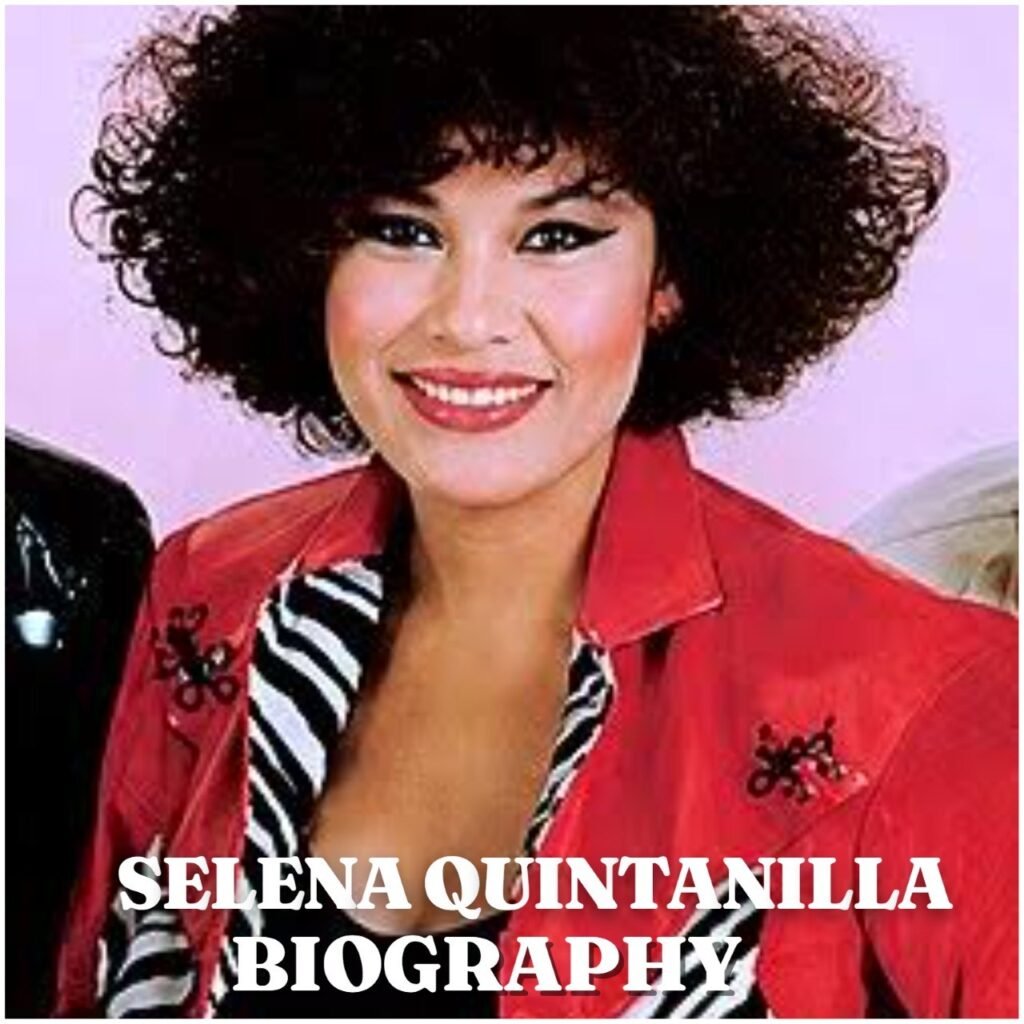
Selena Quintanilla-Pérez, known professionally simply as Selena, was an American singer who became one of the most influential figures in Tejano music. Born on April 16, 1971, in Lake Jackson, Texas, she rose to prominence as the lead singer of Selena y Los Dinos, the family band formed and managed by her father, Abraham Quintanilla Jr. Her combination of Tejano, cumbia, pop and other Latin musical influences helped her reach audiences far beyond the traditional regional market, eventually earning her the enduring title of the “Queen of Tejano Music.”
Selena’s professional career developed rapidly from childhood performances into an internationally recognised recording career. Albums including Ven Conmigo, Entre a Mi Mundo, Selena Live! and Amor Prohibido established her as a major Tejano star. Her 1994 Grammy win for Selena Live! was an important milestone because she became the first Tejano artist to receive a Grammy. Her career was also expanding toward the English-language market when her life ended in 1995, leaving the bilingual Dreaming of You to be released posthumously.
More than three decades after her death, Selena’s name remains prominent in music, fashion and popular culture. Her legacy continues through museums, archival collections, memorials, recordings and tributes, while her estate continues to manage the commercial use of her name and image. In September 2026, current attention has included a legal dispute involving Selena’s estate and Shein over allegedly unauthorized merchandise, as well as a new Beyoncé release combining Beyoncé’s “Irreemplazable” with Selena’s “Como La Flor.”
Early Life and Family Background
Selena Quintanilla was born on April 16, 1971, in Lake Jackson, Texas, to Abraham Quintanilla Jr. and Marcella Quintanilla. She grew up alongside her brother Abraham “A.B.” Quintanilla III and sister Suzette Quintanilla in a family where music became an important part of everyday life. Her father had previously performed with the band Los Dinos and encouraged his children to develop their musical abilities, eventually forming a family group that would become Selena y Los Dinos.
Selena began performing while she was still a child. Her family initially performed at their restaurant and at local weddings and events, before the group developed into a professional act. After the family moved to Corpus Christi, Texas, Selena y Los Dinos increasingly performed in the Tejano music circuit, appearing at rural dance halls, urban nightclubs and other venues. These early experiences gave Selena the stage training that would later become one of the defining features of her career.
Although Selena grew up in Texas and initially spoke English more comfortably, her father encouraged her to learn and perform in Spanish so that she could connect with the Tejano and broader Latin-American audience. She eventually became bilingual in her professional work and developed a musical identity that crossed linguistic and cultural boundaries. Her Mexican-American background became an important part of her artistic identity as she brought Texan and Mexican musical traditions together with contemporary pop influences.
Education
Selena attended Oran M. Roberts Elementary School in Lake Jackson before continuing her education at West Oso Junior High School in Corpus Christi, where she completed the eighth grade. Her increasingly demanding performance schedule meant that her education had to accommodate her professional responsibilities as Selena y Los Dinos became a working musical act. Even while performing extensively, education remained an important part of her development outside the stage.
In 1989, Selena completed her high-school education through the American School, a correspondence school designed in part to accommodate performers and other students whose careers made conventional schooling difficult. Completing high school while maintaining a demanding performance schedule demonstrated how her education continued alongside the rapid development of her musical career.
After completing high school, Selena enrolled in correspondence courses in business administration at Pacific Western University. Her interest in business was particularly relevant because her career eventually expanded beyond singing into fashion and entrepreneurship. She later became involved with her own clothing line and Selena Etc. boutiques, making the business education she pursued useful to the wider professional ambitions she was developing.
Selena Quintanilla’s Music Career
Selena’s professional career began with Selena y Los Dinos, the family group established by her father. The band initially performed at their family restaurant and local events before becoming a professional act in the early 1980s. By the late 1980s, Selena had become a recognised figure within the Tejano music scene, winning Tejano Music Awards and building a reputation as a powerful live performer. Her career expanded considerably after signing with EMI Latin in 1989.
Her discography included Ven Conmigo, Entre a Mi Mundo, Selena Live! and Amor Prohibido. Entre a Mi Mundo made Selena the first Tejana to sell more than 300,000 albums, while Selena Live! won the Grammy Award for Best Mexican-American Album in 1994. Her popularity extended beyond Texas into Mexico and other parts of the United States, helping Tejano music reach listeners who were not traditionally part of its audience.
Selena also developed interests outside recording and performing. She launched a clothing line and opened Selena Etc. boutiques and salons in Corpus Christi and San Antonio. At the same time, she entered into promotional relationships and television appearances and began preparing for an English-language crossover career. She signed with SBK Records to work toward an English-language album, although her plans were interrupted by her death in 1995. Her posthumous album Dreaming of You subsequently became a major part of her musical legacy.
Selena Quintanilla Trending in 2026: Beyoncé Collaboration and Estate Legal Dispute
One of the most recent developments surrounding Selena’s legacy came in September 2026, when Beyoncé released a special 20th-anniversary edition of B’Day. The expanded project included “Irreemplazable (Como La Flor),” a combination of Beyoncé’s Spanish-language recording “Irreemplazable” and Selena’s well-known “Como La Flor.” The collaboration was made possible with approval from Selena’s estate and family, giving a contemporary artist an opportunity to incorporate Selena’s work into a new release.
Another current development involves a lawsuit brought by Suzette Quintanilla and Q Productions concerning merchandise allegedly using Selena’s name, image and likeness without authorization. In September 2026, Shein asked a federal judge to dismiss the lawsuit, arguing that the relevant products were offered by independent third-party sellers through its marketplace rather than being manufactured or directly sold by Shein. The allegations remain part of an active legal proceeding, so the competing positions should be understood as claims and legal arguments rather than a final court determination.
These developments illustrate how Selena’s name continues to have commercial and cultural significance decades after her death. Her estate remains involved in managing the use of her intellectual property, image and likeness, while musicians and cultural institutions continue to reference her work. The combination of new music, legal activity and continuing public commemoration keeps Selena’s legacy visible to audiences who were born long after her original career ended.
Personal Life and Family
Selena was the daughter of Abraham Quintanilla Jr. and Marcella Quintanilla and the younger sister of Abraham “A.B.” Quintanilla III and Suzette Quintanilla. Her father played a central role in developing Selena y Los Dinos and managing Selena’s early career, while A.B. became an important songwriter, bassist and producer associated with the group. Suzette played drums and was also closely involved in the family band’s career. The Quintanilla family therefore remained closely connected to Selena’s professional development from her childhood through her rise to international recognition.
Selena married guitarist Christopher “Chris” Pérez on April 2, 1992. Pérez was a member of Selena y Los Dinos, and the two developed a relationship while working together professionally. They married despite opposition from Selena’s father during the early stages of their relationship. Selena and Chris Pérez did not have children.
The family connection to Selena’s legacy has continued long after her death. Her relatives have participated in projects and initiatives preserving her music, image and history, while the Selena Museum in Corpus Christi was established by the Quintanilla family in 1998. Selena’s husband, family members and estate representatives have also remained connected to public discussions about her work and legacy, helping maintain her presence for later generations.
Selena Quintanilla Age, Religion, Tribe, Height and Physical Appearance
Age: Selena Quintanilla was born on April 16, 1971, in Lake Jackson, Texas, and died on March 31, 1995, at the age of 23. Although her career lasted only a relatively short time, she accomplished major milestones during those years and became one of the best-known performers in Tejano music.
Religion: Selena was raised as a Jehovah’s Witness. The Handbook of Texas records that hundreds of people attended her private Jehovah’s Witness funeral following her death in 1995. Her religious upbringing was therefore part of her family and personal background, although her public career was primarily defined by music, performance and cultural representation.
Tribe/Ethnic Background: “Tribe” is not a standard demographic category for Selena. She was Mexican-American, with Mexican heritage, and her cultural background was an important part of her identity and music. She became particularly influential in Tejano music, a Texas-based musical tradition with strong Mexican cultural roots.
Height and Physical Appearance: Selena’s height is commonly reported as approximately 5 feet 6 inches (1.68 metres), although that measurement is not established in the Handbook of Texas biography. She was recognised for her dark hair, distinctive stage presence and memorable fashion style. Her performance clothing eventually became part of her cultural legacy, with museums and Smithsonian collections preserving examples of her costumes and other memorabilia.
Selena Quintanilla Social Media Presence
Although Selena Quintanilla died in 1995, her name continues to have a significant digital presence through legacy and fan communities. Any social-media accounts operating under Selena’s name today are necessarily managed by representatives, family members, estate-related organisations or other account administrators rather than by Selena personally. For that reason, current posts associated with her name should not be interpreted as personally authored by Selena.
Her continuing digital presence allows newer generations to discover her music, performances, fashion and cultural history. Social-media content about Selena frequently highlights archival photographs, music releases, anniversaries, performances and tributes. Because account ownership and management can change, specific social-media handles should be verified through Selena’s official estate or family channels before being treated as officially authorised accounts.
Selena Quintanilla Net Worth
Selena Quintanilla’s historical net worth at the time of her death in 1995 is reported differently across sources, so there is no single universally verified figure. The Handbook of Texas records that a 1994 Hispanic magazine estimate placed her worth at approximately $5 million. That figure reflects her financial position during the peak of her career and provides a documented historical estimate rather than a modern valuation.
Her income came from several areas, including music sales and performances, recording contracts, endorsements, television appearances and her Selena Etc. clothing and salon businesses. The Handbook of Texas notes that she had a six-figure EMI Latin deal, promotional agreements with major companies and had established her clothing line before opening Selena Etc. boutiques in Corpus Christi and San Antonio.
It is important to distinguish Selena’s personal wealth in 1995 from the current value of her estate. There is no reliable, publicly verified 2026 valuation of the entire estate, which continues to involve music, intellectual property, licensing, merchandise and other commercial rights. Therefore, a reasonable figure for a biographical article is approximately $5 million based on the contemporary 1994 estimate, rather than an unsupported current estate valuation.
Selena Quintanilla’s Legacy in Tejano Music
Selena Quintanilla’s legacy is closely connected to the expansion of Tejano music beyond its traditional regional audience. Through Selena y Los Dinos, she combined Tejano with elements of cumbia, pop and other Latin musical styles, helping bring the genre to a much wider audience in the United States and beyond. The Smithsonian identifies Selena as an artist whose music expanded the audience for Texan-Mexican music, while her 1994 Grammy Award marked an important milestone as the first Grammy won by a Tejano artist.
Beyond music, Selena became an enduring cultural figure for many Mexican-American and Latino audiences. Her bilingual identity, performances, fashion and public image helped her connect with audiences across cultural and linguistic boundaries. Her influence has continued through memorials, documentaries, museum collections, a biographical film and other commemorations. The Smithsonian has preserved photographs, interviews, recordings and elements of her stage wardrobe, reflecting the continuing historical and cultural interest in her career.
Selena’s legacy has also remained visible through institutions and public tributes established after her death. The Selena Museum opened in Corpus Christi in 1998, while the city established the Mirador de la Flor memorial in 1997. She was later inducted into the Texas Women’s Hall of Fame and honored by the United States Postal Service as a Latin music legend. Her posthumous album Dreaming of You further extended her musical presence, while her continuing recognition by museums, fans and music institutions demonstrates the lasting place her work holds in the history of Tejano and Latin music.
Conclusion
Selena Quintanilla’s story remains an important part of American and Latin music history because her career helped bring Tejano music to broader mainstream and international audiences while connecting Mexican-American cultural experiences with listeners across generations. Although her life and career ended at only 23, her recordings, fashion, performances and cultural influence have continued to receive attention through museums, archival collections, memorials and tributes. The Smithsonian continues to document her contributions and notes the lasting influence of her music and cultural presence, while contemporary projects such as the 2026 Beyoncé collaboration demonstrate that her artistic legacy continues to be revisited by new generations.
Frequently Asked Questions About Selena Quintanilla
Who was Selena Quintanilla?
Selena Quintanilla-Pérez was an American singer who became one of the best-known figures in Tejano music. Born in Lake Jackson, Texas, in 1971, she performed with her family band, Selena y Los Dinos, and helped bring Tejano music to a much wider audience.
When was Selena Quintanilla born?
Selena Quintanilla was born on April 16, 1971, in Lake Jackson, Texas.
How old was Selena Quintanilla when she died?
Selena Quintanilla was 23 years old when she died on March 31, 1995.
What was Selena Quintanilla famous for?
Selena was famous for her Tejano music career, powerful performances and distinctive fashion style. She helped expand the audience for Tejano music in the United States and internationally.
What was Selena Quintanilla’s nationality?
Selena Quintanilla was American and came from a Mexican-American family. Her cultural background became an important part of her identity and musical career.
What religion was Selena Quintanilla?
Selena was raised as a Jehovah’s Witness. The Handbook of Texas records that hundreds of people attended her private Jehovah’s Witness funeral in 1995.
Who was Selena Quintanilla married to?
Selena Quintanilla married Chris Pérez, a guitarist and member of Selena y Los Dinos, on April 2, 1992. The couple did not have children.
Did Selena Quintanilla have children?
No. Selena Quintanilla and Chris Pérez did not have children.
What was Selena Quintanilla’s biggest musical achievement?
One of Selena’s major achievements was winning the Grammy Award for Best Mexican-American Album for Selena Live! in 1994. The Smithsonian identifies her as the first Tejano artist to win a Grammy.
What happened to Selena Quintanilla?
Selena Quintanilla died on March 31, 1995, in Corpus Christi, Texas, at age 23. Her death ended a rapidly developing career, but her music and cultural influence continued to grow after her death.
What was Selena Quintanilla’s posthumous album?
Selena’s posthumous album was Dreaming of You, released in 1995 after her death. It became an important part of her musical legacy and reached No. 1 on the Billboard 200.
What was Selena Quintanilla’s net worth?
A 1994 Hispanic magazine estimate cited by the Handbook of Texas placed Selena’s worth at approximately $5 million. This is a historical estimate from shortly before her death and should not be treated as a verified current valuation of her estate.
What is Selena Quintanilla’s legacy?
Selena’s legacy includes her role in bringing Tejano music to mainstream and international audiences. She has also been commemorated through museums, memorials, cultural collections, a biographical film and numerous posthumous honors.
Recent September 2026 developments include a legal dispute involving Selena’s estate and Shein over allegedly unauthorized merchandise and a Beyoncé release featuring a combination of Beyoncé’s “Irreemplazable” and Selena’s “Como La Flor.” The Shein litigation remains ongoing, while the Beyoncé release provides another contemporary connection to Selena’s music and legacy.This merged version preserves the full sections and paragraphs while keeping the current 2026 developments clearly separated from historical biographical information.