
Introduction
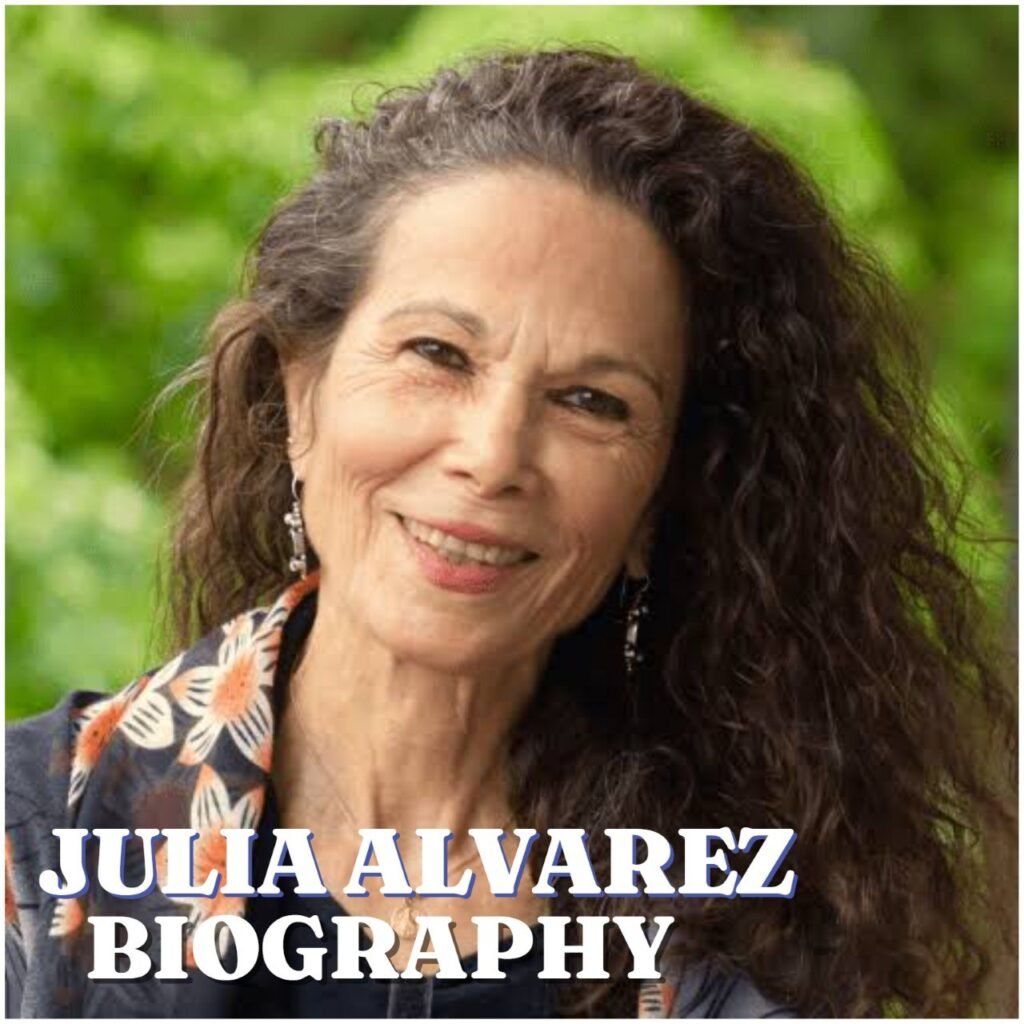
Julia Alvarez is a celebrated Dominican-American novelist, poet, essayist, and educator whose writing has made a lasting contribution to contemporary American literature. Born on March 27, 1950, in New York City, Alvarez spent part of her childhood in the Dominican Republic before her family returned to the United States. Her experiences of living between two cultures, languages, and identities became central to her literary voice and helped shape the themes that would define her career.
Alvarez rose to international prominence with her acclaimed novel How the García Girls Lost Their Accents, published in 1991. She followed it with other influential works, including In the Time of the Butterflies, Yo!, Before We Were Free, Afterlife, and The Cemetery of Untold Stories. Through her fiction and poetry, she has explored subjects such as immigration, family, cultural identity, political oppression, womanhood, memory, and the complicated experience of belonging to more than one world.
Over the course of her career, Julia Alvarez has become one of the most respected Dominican-American literary voices in the United States. Her work has received major literary recognition, including the National Medal of Arts, and her stories have helped introduce readers around the world to Dominican history and the experiences of immigrant and multicultural families. In 2026, Alvarez continues to receive renewed attention for her literary legacy, with new recognition and projects celebrating her influence on American literature and generations of readers and writers.
Early Life of Julia Alvarez
Julia Alvarez was born on March 27, 1950, in New York City to Dominican parents, Eduardo and Julia Alvarez. Although she was born in the United States, her early childhood was closely connected to the Dominican Republic, where her family returned when she was still very young. She grew up in a large and culturally rich family environment, surrounded by Dominican traditions, Spanish language, stories, and family relationships that would later become important influences on her writing. Her early exposure to both Dominican and American cultures gave her a distinctive perspective on identity and belonging.
When Alvarez was ten years old, her family moved back to the United States because of political circumstances in the Dominican Republic during the dictatorship of Rafael Trujillo. The transition was difficult for the young Alvarez, who had been accustomed to life in the Dominican Republic and suddenly had to adjust to American society and the English language. She experienced the challenges of being an immigrant and living between two cultures, experiences that later became recurring themes in her novels, poetry, and essays. Her family’s history and their decision to leave the Dominican Republic also contributed strongly to her understanding of political freedom and cultural identity.
As Alvarez grew older, literature became an important way for her to understand and express her experiences. She developed a strong interest in writing and storytelling while navigating the differences between her Dominican heritage and her life in the United States. Her bilingual and bicultural upbringing eventually became one of the defining characteristics of her literary voice. Rather than viewing her two cultural backgrounds as separate worlds, Alvarez transformed the tensions and connections between them into powerful stories about family, migration, identity, memory, and the search for belonging.
Education of Julia Alvarez
Julia Alvarez began her formal education after her family settled in the United States. She attended the Abbot House School and later graduated from the Dominican Academy in New York City in 1967. Growing up as a Dominican immigrant in the United States, Alvarez experienced the challenges of adapting to a new culture and language, while her education gave her opportunities to develop her interest in literature, writing, and the arts. Her experiences as a young student also strengthened her desire to use writing as a means of expressing her cultural identity.
After high school, Alvarez attended Connecticut College, where she studied for a period before transferring to Middlebury College in Vermont. She graduated from Middlebury College in 1971 with a bachelor’s degree. During her college years, she became increasingly committed to creative writing and literature, developing the skills and confidence that would later support her career as a novelist and poet. Her academic experiences also exposed her to different literary traditions and encouraged her to explore the relationship between language, culture, and personal identity.
Alvarez continued her education at Syracuse University, where she earned a Master of Fine Arts degree in creative writing in 1975. Her graduate studies provided an important foundation for her professional development as a writer and educator. After completing her MFA, she began teaching creative writing and literature while continuing to write poetry, essays, and fiction. The combination of her academic training, teaching experience, and personal background eventually helped shape the distinctive literary style for which she became internationally recognized.
Career of Julia Alvarez
Julia Alvarez began her professional career as a teacher before establishing herself as one of the most important Dominican-American writers of her generation. After completing her MFA in creative writing at Syracuse University in 1975, she taught creative writing, English, and literature at several institutions. Her teaching career included positions at the University of Vermont, George Washington University, and Middlebury College, where she later became a professor emerita. Teaching allowed Alvarez to encourage young writers while continuing to develop her own literary career.
Alvarez gained major literary recognition with the publication of her first novel, How the García Girls Lost Their Accents, in 1991. The book drew heavily on her experiences as a Dominican immigrant growing up between the Dominican Republic and the United States and established her as a significant new voice in American literature. She followed the success of the novel with In the Time of the Butterflies in 1994, a historical novel inspired by the Mirabal sisters, Dominican women who opposed the dictatorship of Rafael Trujillo. Other important works followed, including Yo!, Before We Were Free, Saving the World, Once Upon a Quinceañera, In the Time of the Butterflies, Afterlife, and The Cemetery of Untold Stories, as well as numerous poetry collections, essays, and children’s books.
Throughout her career, Alvarez has used literature to examine immigration, cultural identity, language, family relationships, women’s experiences, political violence, memory, and the meaning of home. Her writing has earned major recognition, including the National Medal of Arts, and has made her an influential figure in Dominican-American and Latino literature. Beyond publishing, she has remained involved in education and literary advocacy, using her public platform to support reading, writing, and cultural understanding. Her continued literary activity and recognition in 2026 demonstrate the enduring influence of her work and her importance to contemporary American literature.
Julia Alvarez Trends Because of Her 2026 Literary Recognition and PBS Documentary
Julia Alvarez is receiving renewed public and literary attention in 2026 because of new recognition celebrating her decades-long contribution to literature. The acclaimed Dominican-American author has been selected as the recipient of the 2026 Lifetime of Excellence in Fiction Award from The Center for Fiction. The honor recognizes her enduring influence as a novelist and her contribution to the literary world, further highlighting the importance of her work in American and Dominican-American literature.
Another major reason Julia Alvarez is trending is the PBS/American Masters documentary Julia Alvarez: A Life Reimagined, which brings renewed attention to her life, career, cultural background, and literary achievements. The documentary examines how Alvarez’s experiences between the Dominican Republic and the United States shaped her writing and explores the impact of her major works. Its 2026 television rollout has introduced her story and literary legacy to a new generation of viewers.
Alvarez is also receiving attention through continuing celebrations of her work, including events surrounding adaptations of her acclaimed novel In the Time of the Butterflies. These developments demonstrate that decades after her breakthrough, her stories about immigration, identity, family, women’s experiences, political history, and belonging remain highly relevant. Her 2026 recognition therefore reflects not only her past achievements but also the continuing cultural influence of her writing.
Personal Life and Family of Julia Alvarez
Julia Alvarez has generally maintained a relatively private personal life while allowing her Dominican heritage and family experiences to influence her literary work. She is married to Bill Eichner, a physician, and the couple has shared a long-standing life together. Alvarez has often drawn inspiration from family relationships, cultural traditions, migration, and the experiences of Dominican families, themes that can be seen throughout her novels, poetry, and essays.
Family has remained an important part of Alvarez’s identity and writing. She was born to Dominican parents, Eduardo Alvarez and Julia Alvarez, and grew up with siblings in a family that maintained strong connections to Dominican culture. Her family’s decision to leave the Dominican Republic and return to the United States when Alvarez was a child had a profound effect on her understanding of immigration, political freedom, language, and belonging. These experiences later became important elements in works such as How the García Girls Lost Their Accents and In the Time of the Butterflies.
Alvarez and her husband have also been involved in humanitarian and community-oriented work, including efforts connected with education and the Dominican Republic. She has frequently used her public platform to highlight the importance of literacy, cultural heritage, and opportunities for young people. Unlike many celebrities, Alvarez has largely kept details of her private household away from the spotlight, choosing instead to focus public attention on her writing, teaching, cultural background, and the social issues that have shaped her career.
Julia Alvarez Age, Religion, Nationality, Height and Physical Appearance
Julia Alvarez was born on March 27, 1950, making her 76 years old in 2026. She is American by nationality and is widely identified as Dominican-American, reflecting her Dominican family heritage and her upbringing between the Dominican Republic and the United States. Alvarez was raised in the Roman Catholic tradition, although her religious beliefs are not a major focus of her public life or literary identity. Information about her exact height is not consistently documented by authoritative sources, so a precise measurement should not be treated as confirmed. In terms of physical appearance, Alvarez is recognized by her distinctive mature appearance, dark hair, expressive features, and warm presence in public photographs and literary events. Her appearance has naturally changed with age, while she has continued to maintain a dignified and professional public image throughout her long career.
Social Media Presence of Julia Alvarez
Julia Alvarez maintains a public presence on social media, where readers can keep up with her literary work, appearances, projects, and other updates. Her official author information lists her Instagram handle as @writerjalvarez, providing readers and admirers with a way to follow her work and literary activities online.
She is also represented on Facebook under the handle @authorjuliaalvarez, where information related to her books, writing career, and public activities can be shared with her audience. Her official author website also encourages readers to follow her across Instagram, Facebook, and Bluesky, reflecting her continued connection with readers beyond her published books.
In addition, Alvarez has a Bluesky presence listed as @writerjalvarez.bsky.social. Through these platforms, her literary audience can remain connected to developments surrounding her writing and career. Her social-media presence complements her official website and the extensive information available through her publishers, helping readers discover both her classic works and newer projects.
Legacy of Julia Alvarez
Julia Alvarez has built a remarkable literary legacy as one of the most influential Dominican-American writers of her generation. Through novels, poetry, essays, and children’s literature, she has brought the experiences of immigrants and multicultural families into the center of American literary conversations. Her writing frequently explores identity, language, family, displacement, memory, and the complicated experience of living between cultures, allowing readers from different backgrounds to connect with stories about belonging and home.
One of the most important aspects of Alvarez’s legacy is the way she has preserved and introduced Dominican history and culture through literature. Works such as In the Time of the Butterflies have helped international audiences learn about the Mirabal sisters and the political history of the Dominican Republic, while How the García Girls Lost Their Accents has become an important work about immigration and bicultural identity. Her success has also helped create greater visibility for Latina and Dominican-American voices within American literature.
Beyond her published works, Alvarez’s influence extends to education, literary communities, and younger generations of writers. Her career as an educator has allowed her to encourage students and aspiring authors, while her writing has demonstrated the power of using personal and cultural experiences to tell universal stories. Her continuing recognition, including major literary honors and renewed attention to her work in 2026, reflects the lasting importance of her contribution to literature and her place in the history of Dominican-American storytelling.
Conclusion
Julia Alvarez’s life and career represent a remarkable journey of culture, identity, education, and literary achievement. From her childhood experiences between the Dominican Republic and the United States to her emergence as an internationally respected novelist, poet, and essayist, she has transformed personal and cultural experiences into powerful stories that continue to inspire readers. Through works such as How the García Girls Lost Their Accents and In the Time of the Butterflies, Alvarez has given greater visibility to Dominican-American experiences while addressing universal themes of family, migration, identity, memory, and belonging. Her continuing recognition in 2026 demonstrates that her literary influence remains strong, securing her place as an important voice in American and Dominican-American literature.
Frequently Asked Questions About Julia Alvarez
Who is Julia Alvarez?
Julia Alvarez is a Dominican-American novelist, poet, essayist, and educator best known for works such as How the García Girls Lost Their Accents and In the Time of the Butterflies. Her writing frequently explores immigration, identity, family, culture, language, and belonging.
How old is Julia Alvarez?
Julia Alvarez was born on March 27, 1950. She is 76 years old in 2026.
Where was Julia Alvarez born?
Julia Alvarez was born in New York City, United States, on March 27, 1950. Her family is of Dominican origin, and she spent part of her childhood in the Dominican Republic.
What is Julia Alvarez famous for?
Julia Alvarez is famous for her novels, poetry, essays, and children’s literature, particularly How the García Girls Lost Their Accents and In the Time of the Butterflies. Her work has helped bring Dominican-American experiences and multicultural identity to a wider literary audience.
What are Julia Alvarez’s most famous books?
Some of Julia Alvarez’s best-known books include How the García Girls Lost Their Accents, In the Time of the Butterflies, Yo!, Before We Were Free, Afterlife, and The Cemetery of Untold Stories.
Is Julia Alvarez Dominican?
Yes. Julia Alvarez is Dominican-American. Although she was born in New York City, her parents were Dominican, and she spent part of her childhood in the Dominican Republic.
What did Julia Alvarez study?
Julia Alvarez studied at Connecticut College before transferring to Middlebury College, where she earned a bachelor’s degree in 1971. She later earned a Master of Fine Arts degree in creative writing from Syracuse University in 1975.
Is Julia Alvarez married?
Yes. Julia Alvarez is married to Bill Eichner, a physician. She has generally kept her private family life away from extensive public attention.
What is Julia Alvarez’s religion?
Julia Alvarez was raised in the Roman Catholic tradition. Religion and spirituality sometimes appear as cultural elements in her writing, although they are not the primary focus of her public life.
What awards has Julia Alvarez received?
Julia Alvarez has received significant literary recognition throughout her career, including the National Medal of Arts. In 2026, she was also selected to receive the Lifetime of Excellence in Fiction Award from The Center for Fiction.
Why is Julia Alvarez trending in 2026?
Julia Alvarez is receiving renewed attention in 2026 because of major recognition of her literary career, including the Lifetime of Excellence in Fiction Award, as well as the PBS/American Masters documentary Julia Alvarez: A Life Reimagined, which celebrates her life and literary achievements.
Does Julia Alvarez have social media accounts?
Yes. Her publisher lists her Instagram handle as @writerjalvarez, Facebook as @authorjuliaalvarez, and Bluesky as @writerjalvarez.bsky.social.
What is Julia Alvarez’s legacy?
Julia Alvarez’s legacy is rooted in her contribution to Dominican-American and contemporary American literature. Through her novels, poetry, essays, and teaching, she has explored immigration, cultural identity, family, language, political history, and belonging while inspiring readers and younger writers around the world.